





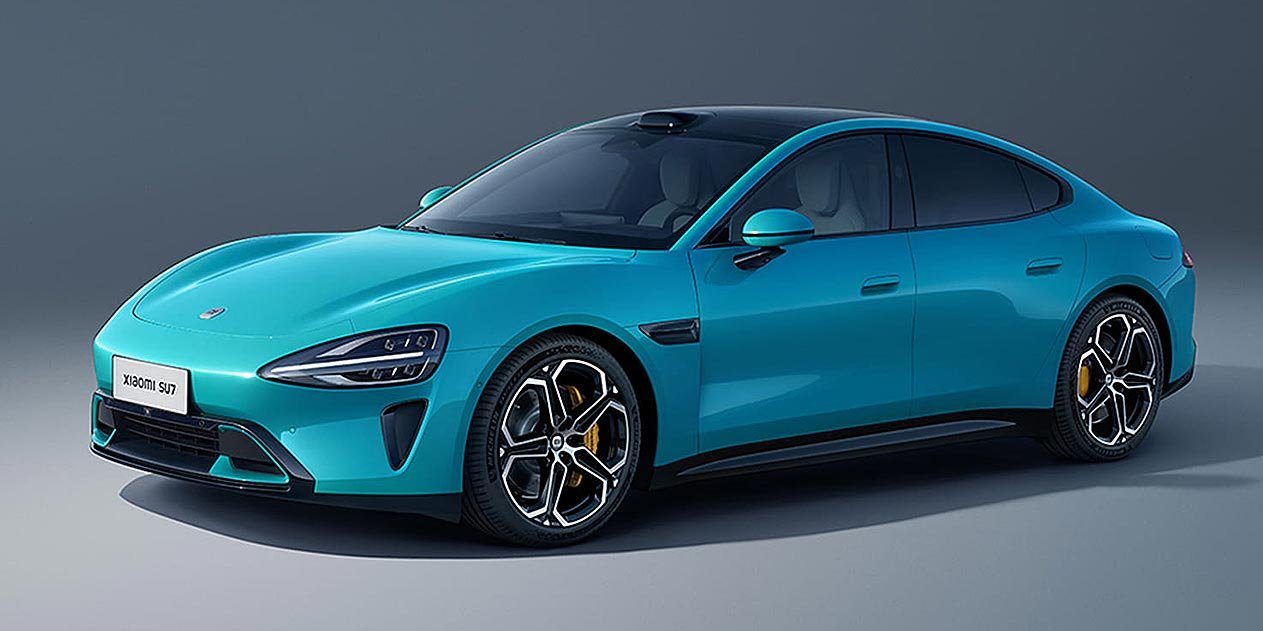
An Xiaomi SU7 owner in China says his car has passed 400,000 km, about two years after he took delivery. His infotainment screen shows 400,000 km total, 63,455 kWh used and 15.6 kWh/100 km. Over 730 days, that is about 548 km every single day.
| Item | Reported figure |
|---|---|
| Total mileage | 400,000 km |
| Ownership time | About 2 years (730 days) |
| Average daily distance | About 548 km |
| Energy consumed | 63,455 kWh |
| Consumption on screen | 15.6 kWh/100 km |
| Battery health | 91.08% (down 8.92 points) |
| Real-world range | About 500 km (owner’s claim) |
| Electricity cost | About 12.5 yuan/100 km |
| Tires | 9 replacements, 15 tires |
Battery health after 400,000 km
The owner asked Xiaomi’s in-app service assistant for a battery reading and got 91.08%. The assistant added a warning: the figure comes from remote data and can be off, and a service center can run a full pack diagnosis. I would read it as a good indicator, not a lab result.

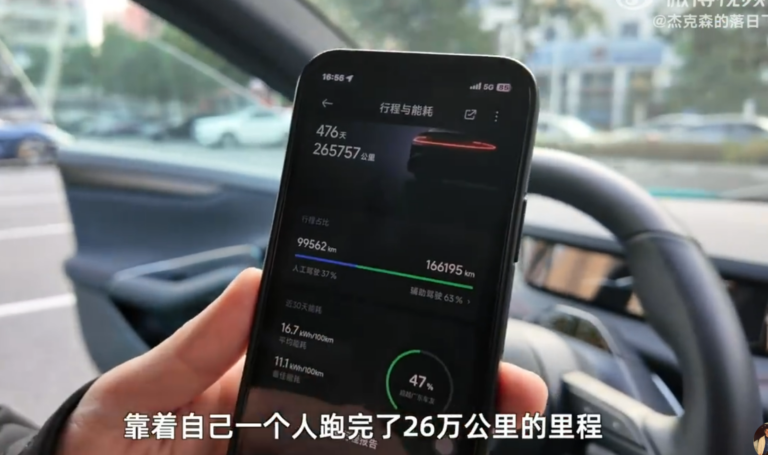
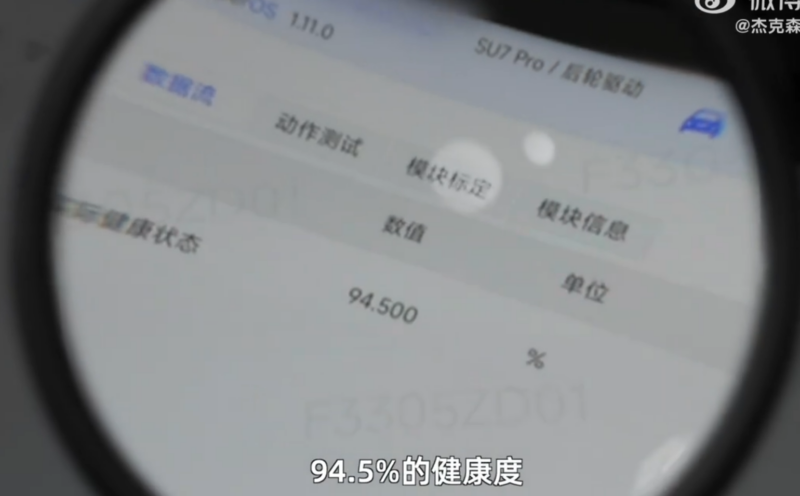
It does line up with earlier numbers. In February 2026, Mr. Feng’s Xiaomi SU7 Pro read 94.5% after 265,757 km in 476 days. If this is the same car, it lost another 3.4 points over roughly 135,000 km. That is not much for a car driven this hard.
Range and charging cost
The owner says he still gets about 500 km on a full charge. The Xiaomi SU7 Pro’s 94.3 kWh pack is rated at 830 km on the CLTC cycle, and CLTC is a generous test, so 500 km after 400,000 km looks respectable.
On cost, he says about 60,000 kWh cost around 50,000 yuan. That comes to 0.125 yuan per km, or 12.5 yuan per 100 km. Your own number will depend on how much you charge at home and what your local rates are.
Tires and brakes
He changed 3 tires at 397,000 km. That brings the total to 9 replacements and 15 tires. For this mileage, that is ordinary. In the earlier report he also said the car had never needed new brake pads, which says a lot about how much regenerative braking is doing.
The 600,000 km goal
His account name says he wants to be the first person to take an SU7 to 600,000 km. Earlier coverage said he was aiming to get there within three years. He has about 200,000 km left, roughly another year at this pace, so he is ahead of that plan.
Where this fits in the Xiaomi ecosystem
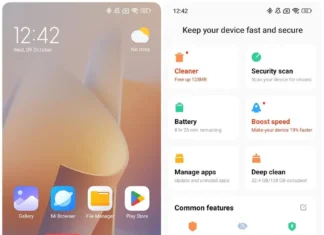
Xiaomi calls its strategy “Human x Car x Home,” and this story shows a small piece of it. The battery check went through Xiaomi’s own app, the car runs HyperOS, and one Xiaomi account ties it to your phone, tablet, watch and Mijia home devices. If you already use an air purifier, robot vacuum or AC from Xiaomi, the car sits in the same account.
Europe is also waiting on this kind of data. Xiaomi’s plans point to an SU7 launch there from 2027.
Take it with a grain of salt
This is one owner who drives far more than most people, mostly on highways, and the battery figure comes from remote data. It tells you what is possible, not what your own SU7 will do.
Stay up to date with xiaomi auto as you keep a live tracker where you show you when the release new car and check out am xiaomi auto hub page.