






- Home
- Main Catalog
- Xiaomi Cars
- Xiaomi SkyNomad N90 Max Studio
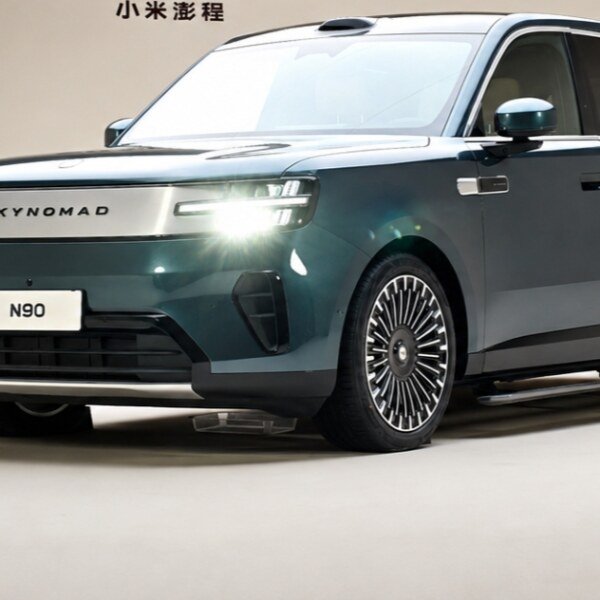
Xiaomi SkyNomad N90 Max Studio
- DriveTrain: AWD
- Body Type: 5-seat SUV
- Battery Capacity: 76 kWh
- Autonomous Driving Level: Nil
PROS
- Genuinely unique factory feature: electric lifting roof + 30-second bed conversion, no aftermarket camper conversion needed
- Combined range still exceeds 1,600 km despite the added roof weight/drag
- Backed by Xiaomi's full safety and ADAS suite (Thor-U, LiDAR, 25 standard safety features) rather than a stripped-down "lifestyle trim"
CONS
- China-only, no export timeline announced
- Several hardware specifics (weight, warranty, trunk volume, sound system, wireless charging) still aren't in Xiaomi's own materials
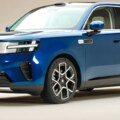
The Xiaomi SkyNomad N90 Max Studio is the top trim of the N90 Max, under Xiaomi’s new SkyNomad sub-brand. Full-size SUV, camper-crossover body, five seats instead of the regular N90 Max’s seven — Xiaomi pulled the third row for cargo and bed space. Dual-motor AWD, but don’t call it an EV: it’s an EREV. A 1.5-liter turbo engine spins a generator and never touches the wheels. Worth noting since Xiaomi’s other cars, the SU7 and YU7, are both pure battery-electric. This one isn’t.
76 kWh battery, CALB ternary lithium-ion, usable capacity unpublished. Pure-electric range sits around 462 km CLTC — that’s the only figure Xiaomi has released, and the car is China-only right now, so no WLTP or EPA numbers exist yet. Combined range with the generator running is listed at 1,705 km CLTC, though one outlet had it at 1,688 km — probably a translation slip, possibly a spec revision, not worth treating as settled until Xiaomi puts out an official sheet. DC fast charging: 20–80% in 18 minutes. Xiaomi also says a 15-minute top-up adds about 285 km. AC charging rate hasn’t been published.
Price at launch is RMB 299,900 — roughly $44,700 or €38,400–39,000 converted, for reference only, since Xiaomi hasn’t said a word about selling this outside China. Not a commuter car. It’s built for families who camp and for the content-creator crowd Xiaomi is chasing pretty openly with the roof tent and modular cabin — this is a weekend rig dressed up as an SUV. In Xiaomi’s own lineup it sits above the smaller N70 Max, and off to the side of the YU7, which stays BEV-only. Outside Xiaomi, it’s chasing the Li Auto L9 and the AITO M9 — both EREV family SUVs in the same size and price bracket. The L9 is the closest match if you’re setting up a head-to-head.
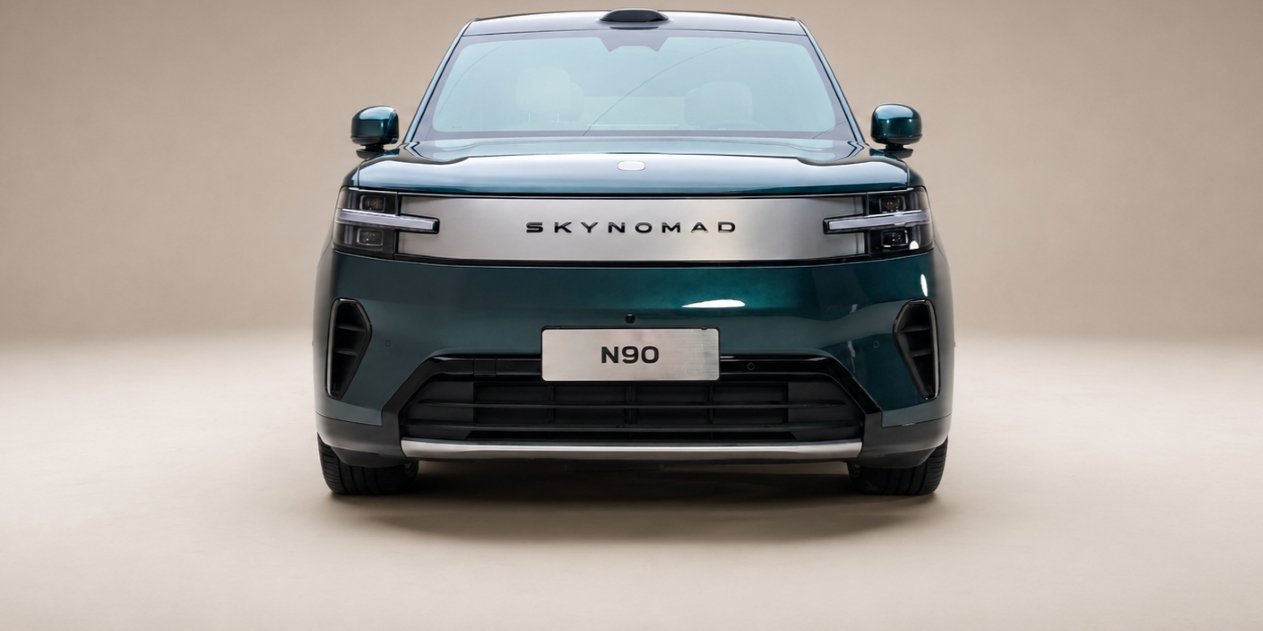
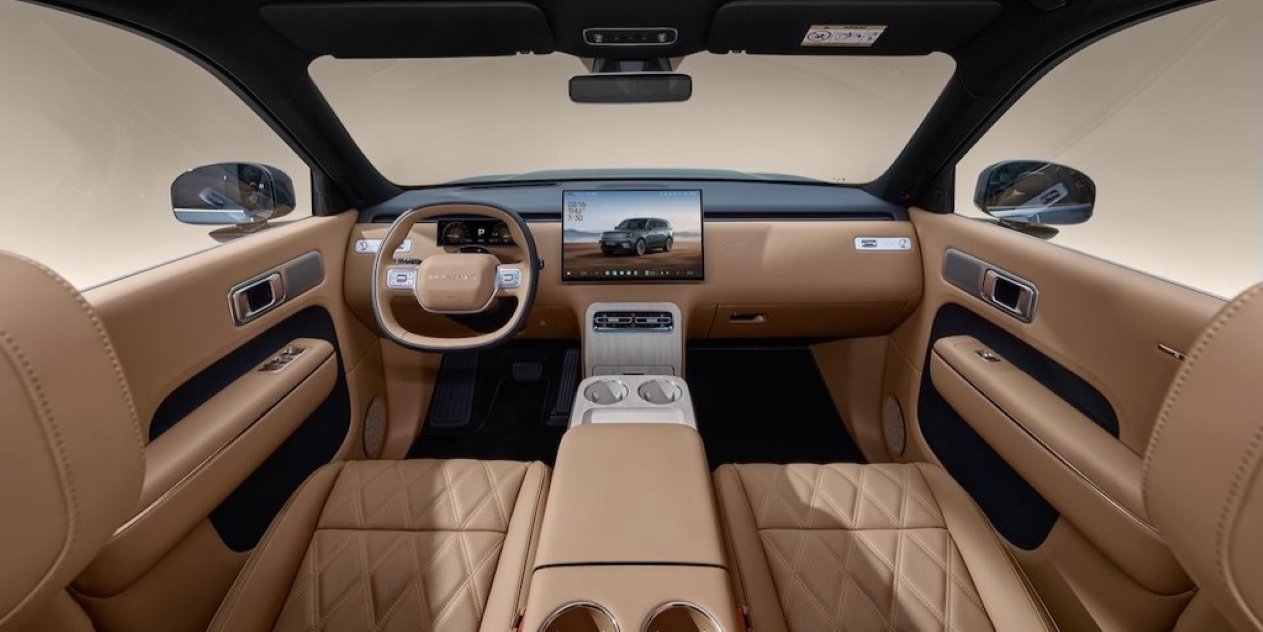
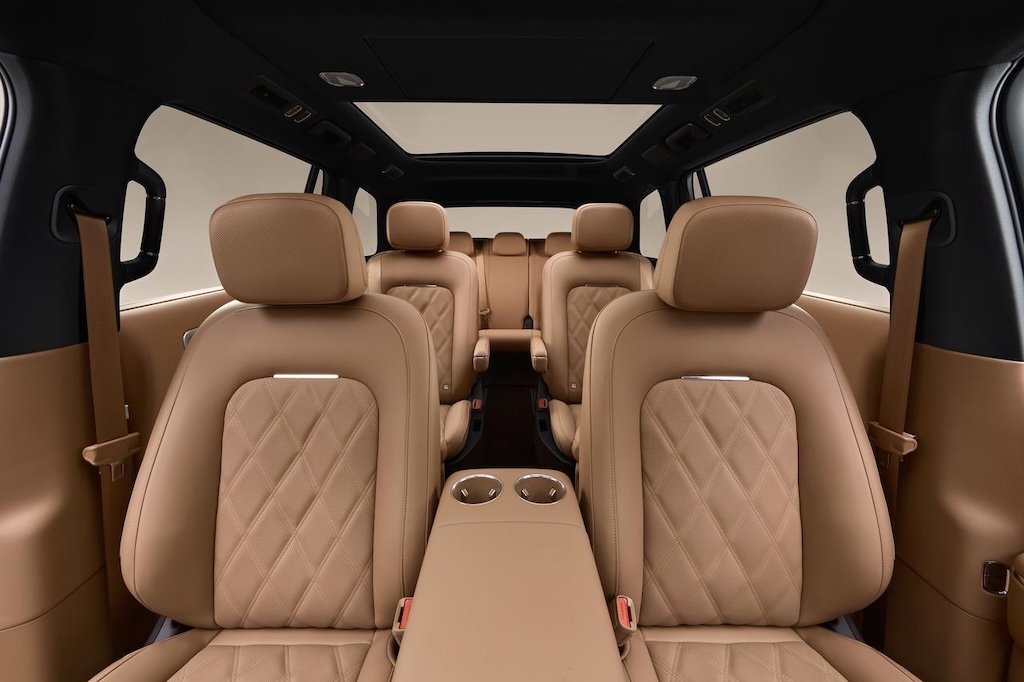
Xiaomi SkyNomad N90 Max Studio Images
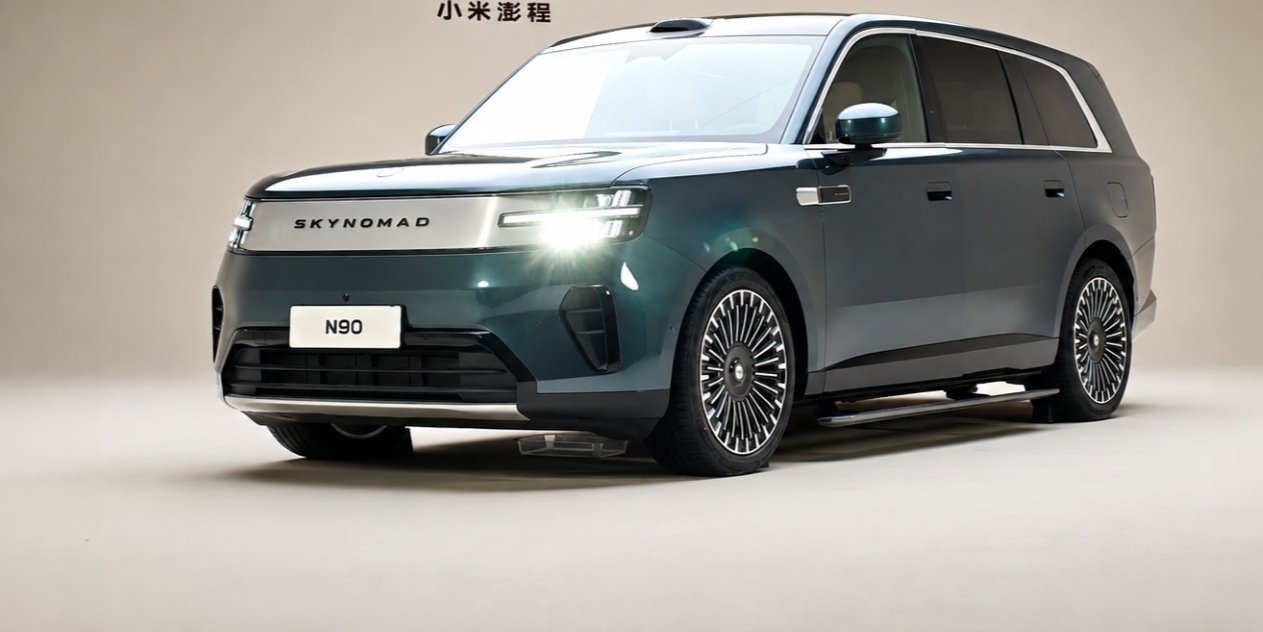
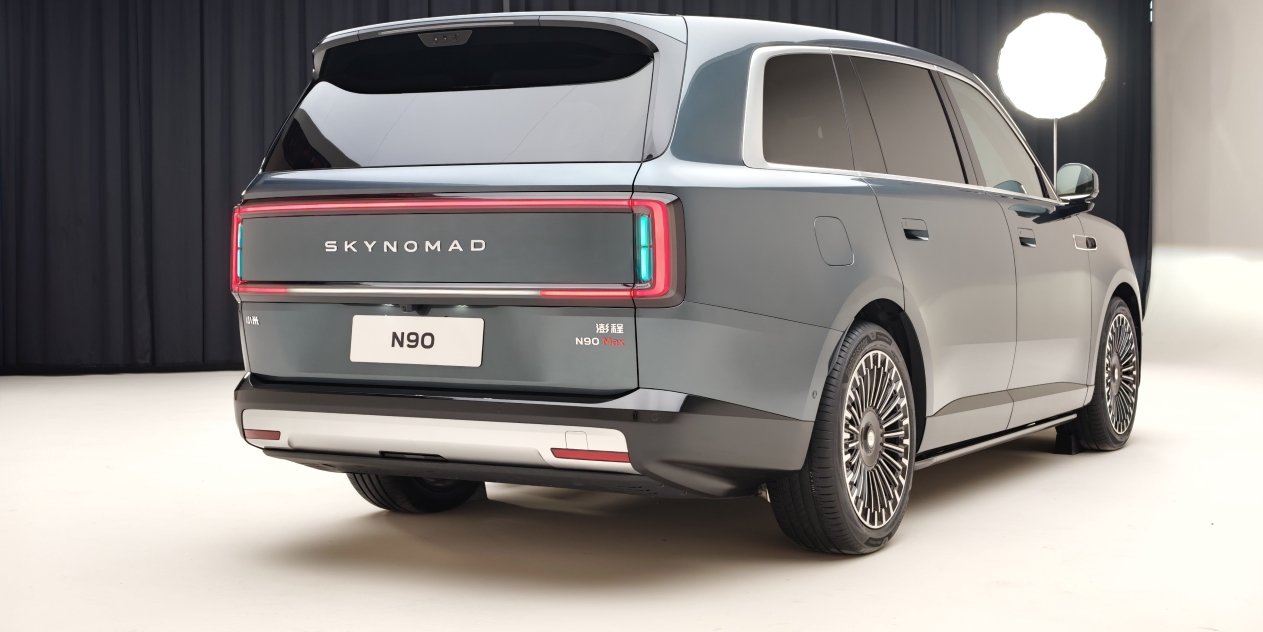
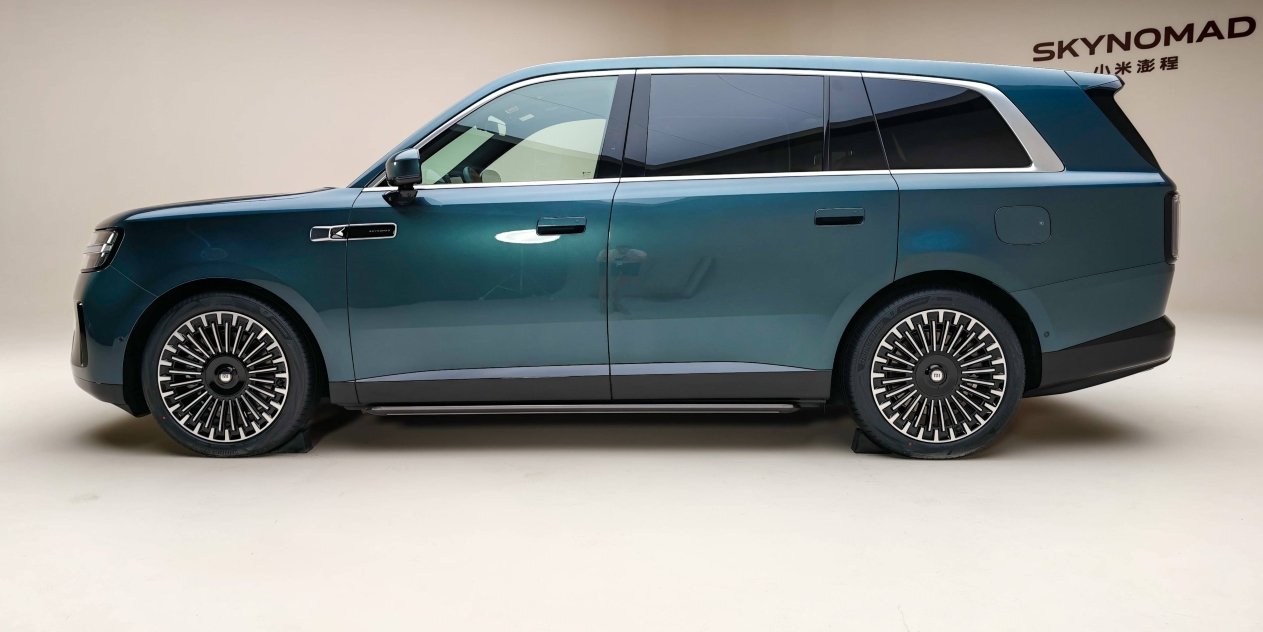
Full Specsification
MODEL
| Full Model Name A full model name is the complete, specific designation of a product, software, or system that includes its brand, series, version, and technical configuration. | Xiaomi SkyNomad N90 Max Studio |
| Segment / Class Segment and Class refer to ways of dividing a large group, data set, or concept into smaller, organized parts. | Full-size SUV / "Intelligent, Reconfigurable, Large-space" EREV crossover |
| Powertrain Options Powertrain options refer to the different choices available for a vehicle's power-generating and power-delivering system—the complete assembly that creates energy and pushes the car forward. | AWD |
PRICE & AVAILABILITY
| Base Price A base price is the starting cost of a product or service before adding any extra fees, taxes, optional upgrades, or discounts | RMB 299,900 |
| Availability Status Availability status means the current condition or state of whether a person, product, system, or resource is accessible, online, or ready for use. | On Sale |
| Markets Available "Markets available" generally means the specific geographic regions, stores, or consumer groups where a product or service is ready and offered for sale. | Chinese Mainland only |
| Brand / Manufacturer brand is the name, term, design, or symbol that identifies a seller's product and shapes public perception, while a manufacturer is the actual company that physically produces or builds the goods. | Xiaomi Auto, SkyNomad sub-brand, built on the Xiaomi Kunlun Platform |
BATTERY & CHARGING
| Battery Capacity Battery capacity is the total amount of electrical energy a battery can store and deliver, functioning much like the size of a fuel tank. | 76 kWh ternary lithium, Xiaomi Armor Scale Battery |
| Range The word range means a set of different things, a scale between limits, or the distance an object can cover. | 462 km electric-only (CLTC); 1,688 km combined (CLTC) |
| DC Charging DC charging stands for direct current charging, a high-power method that sends electricity straight to an electric vehicle's battery without needing an internal conversion step. | CCS-type fast charging |
| Charging Time Charging time is the total length of time required to recharge a battery from empty to full capacity. | 20–80% in ~18 min (Kunlun Hyper Range System, shared across lineup) |
| AC Charging AC charging means supplying alternating current (AC) from the electrical grid to an electric vehicle, where the car's built-in onboard charger converts it into direct current (DC) to power the battery. | Not specified |
| Battery Warranty A battery warranty is a guarantee from a manufacturer or seller to repair or replace a battery if it fails due to factory defects within a set time. | Not stated |
| Energy Consumption Energy consumption is the total amount of energy used by a person, building, device, or country over a specific period. | Not specified |
PERFORMANCE
| Power Output Power output is the rate at which a device, system, or living body generates, transfers, or delivers energy (doing work over time). It is typically measured in watts (W) or kilowatts (kW). | 310 kW/416 hp |
| Acceleration Acceleration is the rate at which an object changes its velocity over time. | 0–100 km/h in 5.9 sec |
| Motor Configuration Motor configuration refers to the physical layout, internal electrical wiring setup, or software/hardware settings of a motor. | Dual-motor AWD |
| Torque the rotational equivalent of linear force—it is the twisting or turning power that causes an object to rotate around an axis or pivot point. | Not restated |
| Top Speed Top speed means the highest or maximum velocity that a vehicle, runner, or object can achieve under ideal conditions. | 190 km/h |
BODY & DIMENSIONS
| Dimensions A dimension is a measurement in a specific direction (such as length, width, or height) or a distinct aspect, feature, or scope of a situation. | 5,285 mm × 1,998 mm, 3,080 mm wheelbase |
| Trunk/Boot Capacity Trunk or boot capacity refers to the total volume of storage space available in the rear cargo compartment of a vehicle. | Not specified |
| Body Style A car's body style refers to the overall shape, structural design, and external configuration of a vehicle. | 5-seat SUV with factory pop-up cabin roof |
| Kerb Weight Kerb weight is the total mass of a vehicle with all standard equipment and necessary operating fluids, but without any passengers or cargo. | Not stated |
| Ground Clearance Ground clearance is the vertical distance between the lowest part of a vehicle's frame or undercarriage and the flat ground below it | Not stated |
| Frunk/Bonnet Capacity Frunk/bonnet capacity is the total volume of storage space available under the front hood (bonnet) of a vehicle. | Not stated |
| Sunroof A sunroof is a movable panel in a vehicle's roof that opens or tilts to let in fresh air and sunlight. | Factory-integrated electric lifting cabin roof — raises interior height to 2,294 mm, +100 mm roof height, Cd 0.245; upper loft area 2,110 × 985 mm, max bed length 1,946 mm, aluminum-honeycomb frame rated to 200 kg, 1.7 m² opening front screen |
SAFETY & DRIVER ASSISTANCE
| ADAS Features ADAS stands for Advanced Driver Assistance Systems, which are electronic technologies in modern vehicles designed to increase road safety, enhance driving comfort, and prevent crashes by minimizing human error. | NVIDIA Thor-U chip (700 TOPS), LiDAR + 4D mmWave radar, Xiaomi Hyper Assisted Driving (XLA architecture), 25 standard safety-assist features incl. AEB and AES (up to 2 consecutive evasive maneuvers) |
| Autonomous Driving Level Autonomous driving levels are a standardized six-stage classification system created by SAE International (ranging from Level 0 to Level 5) that measures how much control a vehicle's automated system takes compared to a human driver | No SAE level stated |
| Crash Test Ratings Crash test ratings are standardized scores that measure how well a vehicle protects its occupants during controlled collision simulations. | No official score given |
| Over-the-Air (OTA) Updates An Over-the-Air (OTA) update is the wireless delivery and installation of software, firmware, or operating system updates to a connected device via Wi-Fi or cellular networks | Not explicitly stated |
COMFORT & SEATING
| Seating Capacity Seating capacity means the maximum number of people who can sit in a specific space, vehicle, or venue. | 5 |
| Seat Material Seat material refers to the fabric, leather, or synthetic substance used to cover or build a seating surface. | Ventilated and heated |
| Wireless Charging Wireless charging is a cable-free method that powers electronic devices by transferring energy through electromagnetic fields instead of a physical plug. |
DISPLAYS & CONNECTIVITY
| Centre Screen A centre screen (or center display) is a built-in digital display panel located in the middle of a vehicle's dashboard or console | 16.1" 3K touchscreen |
| Mirror Link MirrorLink is a connectivity standard that projects a smartphone’s screen and compatible apps onto a car's built-in infotainment dashboard. | |
| Apple CarPlay Apple CarPlay is a smart software standard created by Apple that puts an iPhone interface directly onto a car's built-in display screen. | |
| Android Auto Android Auto is a software platform developed by Google that projects a driver-safe, simplified version of your Android phone onto your car's central dashboard display | |
| Driver's Display A driver's display is the digital or analog instrument panel mounted directly behind the steering wheel that shows real-time driving data like speed, fuel or battery level, and warning alerts | 8.88" digital cluster |
| Head-Up Display (HUD) A head-up display (HUD) is a transparent screen that projects data directly into your line of sight so you never have to look away from your main view. | Yes, 20-inch HUD |
KEY EV TECH
| Vehicle-to-Load (V2L) Vehicle-to-Load (V2L) is a bidirectional charging feature in some electric vehicles (EVs) that turns the car's high-voltage battery into a mobile power source for external electrical devices. | |
| Vehicle-to-Grid (V2G) Vehicle-to-Grid (V2G) is a system that allows electric vehicles (EVs) to send stored electricity back into the public power grid using bidirectional (two-way) chargers. |
ADDITIONAL SPECS
| Headlight Type Headlight "types" refer to either the lighting technology used (like halogen or LED) or the socket/bulb code (like H7 or HB3) required for your vehicle's specific assembly | Not detailed |
| Adaptive Headlights Adaptive headlights are intelligent vehicle lighting systems that automatically change their direction, range, or brightness to match driving conditions and improve nighttime visibility. | |
| Sound System Brand Audio branding (also called sonic or sound branding) is the strategic use of music, voice, and unique sounds to give a brand an audible identity | Not confirmed |
| Speaker Count Speaker count is the audio processing task of automatically estimating the total number of unique or simultaneous people speaking in a recording. | Not confirmed |
| Navigation System A navigation system is an electronic tool that finds a vehicle's exact location and guides the user along a route to a destination. | Xiaomi Hyper XiaoAi voice assistant |
| Face Recognition Face recognition is a technology that uses computers to identify or verify a person's identity by analyzing unique facial features from a digital image or video. | |
| Fingerprint Sensor A fingerprint sensor is an electronic biometric hardware device that captures the unique pattern of ridges and valleys on a fingertip to identify and authenticate a person. | |
| Remote Parking Remote parking means an advanced driver-assistance technology that lets you park or move your vehicle using a smartphone app or a key fob while standing outside the car. | |
| Official Dealer Network An Official Dealer Network is a group of authorized, independent businesses approved by a manufacturer to sell, maintain, and repair its products in specific regions. | China only |
| Service Interval A service interval is the recommended schedule of distance, time, or operating hours between routine maintenance checks for a vehicle or piece of equipment. | Range extender: first service at 3 years / 30,000 km |
| Roadside Assistance Roadside assistance is a support service for drivers whose vehicles break down or stop working due to a mechanical failure, flat tire, or dead battery | Not mentioned |
NOTE
| Data Source A data source is the origination point or specific location where information comes from before it is collected, processed, or analyzed | Xiaomi Auto official press release, "Xiaomi SkyNomad Family Unveiled" (Sept 7, 2026 launch, published Sept 11, 2026) |
User Reviews
Product FAQ
What is the SkyNomad N90 Max Studio?
It's the camping-focused variant of Xiaomi's flagship SkyNomad N90 Max SUV. Xiaomi describes the car not as a camper van but as a "mobile studio," aimed at the digital nomad and social-media-influencer crowd.
What's different about the Studio version vs. the regular N90 Max?
The Studio variant drops one row of seats, offering five seats instead of seven, and focuses on maximum camping flexibility, with Xiaomi calling it a "Two-Level Loft Space" — a two-story living concept on wheels.
What's the standout feature?
An electric pop-up roof. When raised, interior height reaches 2,294 mm, tall enough for someone up to 1.80 m to stand upright. The upper tier measures 2,110 by 985 mm and serves as a 1,946 mm-long sleeping area, with an aluminum honeycomb-reinforced frame rated to support up to 200 kg.
How do the seats become a bed?
The rear seats convert into a 1.87 by 1.24 m bed in 30 seconds via electric drives.
What powers it — is it fully electric?
No — it's an EREV (extended-range EV). Every model pairs a battery with a gasoline range extender that generates electricity but never drives the wheels — the setup currently dominating China's family-SUV market. It has all-wheel drive from two electric motors, doing 0–100 km/h in 5.9 seconds with a 190 km/h top speed, powered by a 76 kWh ternary-lithium battery, plus a 1.5-liter turbo engine as the range extender.
What's the range?
Pure-electric range is 462 km (CLTC), and combined range with the range extender is 1,688 km — enough to drive from Shanghai to Beijing (1,000+ km) without a charging stop.
What other camping amenities does it have?
A 9-liter compressor refrigerator, 220V and 15V power outlets, and an aluminum wood-effect floor heated up to 38°C. The non-roof-tent trim also gets electric side steps, exterior storage cupboards, a 30-inch ceiling-mounted drop-down screen for entertainment or privacy, and even a 4K ring light built into the cabin mirror for content creators doing makeup on the road.
How much does it cost, and when can I buy one?
Price starts around €36,600 (roughly RMB 299,900, about $44,700). Deliveries are expected from late 2026, initially only in the Chinese market — there are currently no announced export plans.
How big is it?
The flagship N90 Max measures 5,285 mm long, 1,998 mm wide, and 1,825 mm tall, with a 3,080 mm wheelbase and a curb weight of 2,800 kg.
Disclaimer Note
You can write your own disclaimer from APS Settings -> General -> Disclaimer Note.