





Redmi Turbo 5 vs Poco X8 Pro
Redmi Turbo 5 vs Poco X8 Pro, Both phones are 5G upper-midrange models with the same MediaTek Dimensity 8500-Ultra chip. The Redmi Turbo 5 is for people who play a lot of games and want a battery that lasts. The Poco X8 Pro is for people who want the same speed for less money. The Turbo 5 reached India on June 16, 2026, as the first Turbo-series phone sold there, and the Poco X8 Pro had already launched in March.

Quick Verdict
- Redmi Turbo 5: better if you want the bigger battery, more RAM options and NFC, and can pay a bit more.
- Poco X8 Pro: better if you want the same chipset and screen for less and can live with a smaller battery.
Daily Use
Screen and speed are nearly identical. Both have a 6.59-inch 1.5K AMOLED panel at 120Hz, and both use the same 5300 mm² 3D Ice Loop cooling, so games should run alike. The battery is the real gap. The Turbo 5 has 7,540 mAh against 6,500 mAh on the X8 Pro, which a heavy user will notice by evening. Both charge at 100W, and the Poco adds 27W reverse charging and bypass charging. The Poco is also a little lighter, about 201 g against 204 g. The Turbo 5 offers more RAM (12 GB vs 8 GB on the versions compared) and has NFC, which matters for contactless payments.
Redmi Turbo 5 vs Poco X8 Pro Price, Availability & Market Fit
In India, the Turbo 5 launched at Rs 35,999 and the X8 Pro at Rs 29,999. Current listings are higher: ₹34,999 for the Poco X8 Pro and ₹37,999 for the Redmi Turbo 5. The gap is roughly ₹3,000 to ₹6,000 depending on the store, and prices in other countries differ, so check your local store. If you need the battery, the RAM or NFC, the extra money for the Turbo 5 is justified. If you don’t, the Poco does almost the same job for less.
Ecosystem & Rival Context
Redmi also sells the Turbo 5 Pro and Turbo 5 Max above this phone. Poco’s step up is the X8 Pro Max: Dimensity 9500s, 9,000 mAh battery, 6.83-inch screen, ₹44,999. From other brands, the Realme GT 7 and OnePlus Nord 5 compete at similar prices. This pair is still the cleaner choice because the chip is the same, which leaves only battery, RAM and price to weigh.
Pros & Cons
The Turbo 5’s 7,540 mAh battery suits gamers and anyone who is away from a charger all day, and the extra RAM and NFC help with payments and multitasking. Its price is the drawback, since it is hard to justify if all you want is solid performance. The X8 Pro costs less and still gets you the same chipset, screen and 100W charging. The trade-off is a smaller 6,500 mAh battery and no NFC, which heavy users will feel.
Choose the Redmi Turbo 5 if battery life, RAM and NFC matter most. Choose the Poco X8 Pro if the same performance for less money matters more.
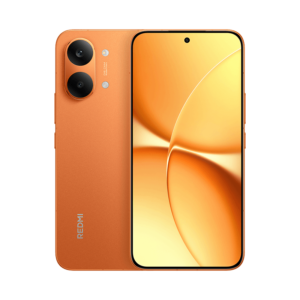
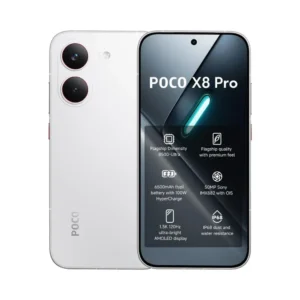
| |
| Price | $300.00 $425.00 |
| Our Rating | |
| Brand | Redmi Poco |
| Category | Xiaomi Smart Phones Xiaomi Smart Phones |
Identification
| Phone ID A phone ID typically refers to a unique hardware identifier like an IMEI Number (International Mobile Equipment Identity) that distinguishes your specific physical phone from any other device. | Not confirmed 2511FPC34G (global), 2511FPC34I (India) |
| Brand / Model A brand model is a strategic framework that defines how a company builds, positions, and manages its identity to connect with customers and guide business decisions. | Xiaomi Redmi Turbo 5 Xiaomi Poco X8 Pro |
| Variant A variant is something that differs in some way from others of the same kind or from a standard. |
12GB/256GB, 16GB/256GB, 12GB/512GB, 16GB/512GB 8GB/256GB, 8GB/512GB, 12GB/512GB |
| Release date A release date is the specific day when a product, service, or official piece of information becomes available to the public | January 29, 2026 (China); India launch June 16, 2026 March 2026 |
| Price A price is the amount of money or other compensation that a buyer gives to a seller to acquire a product or service | CNY 1,999 (12GB/256GB) up to CNY 2,599 (16GB/512GB) €389–399 (8GB/256GB) |
Smartphone Display
| Size Size means how large or small a person, object, or amount is | 6.59 in 6.59" |
| Resolution The measure of sharpness and detail in a digital photo, video, or screen, usually counted in pixels or dots per inch (DPI). | 1268 x 2756 (~460 ppi) 2756 x 1268 (1.5K) |
| Panel type The panel type of a screen or monitor refers to the specific liquid crystal or diode technology used to display images, which dictates the screen's color accuracy, viewing angles, contrast, and speed. | AMOLED, 3840Hz PWM, Dolby Vision, HDR10+ AMOLED, HDR10+, Dolby Vision |
| Refresh rate A refresh rate is the number of times per second a screen updates the image it shows. | 120Hz 120Hz |
| Peak brightness Peak brightness is the highest level of luminance a display screen can achieve for a brief moment in a small area. | 3,500 nits 3500 nits |
Smartphone Performance
| Operating system An operating system (OS) is the main system software that manages a computer's physical hardware and provides a base for other programs to run | Android 16, HyperOS 3 Android 16, HyperOS 3 |
| Chipset A chipset is a group of microchips on a computer's motherboard or electronic device that manages the flow of data between the CPU, memory, storage, and peripheral devices. | MediaTek Dimensity 8500 Ultra (4 nm) MediaTek Dimensity 8500 Ultra (4nm) |
| RAM RAM stands for Random Access Memory, which is a device's short-term memory used to temporarily store data that the processor needs right now. | 12GB or 16GB 8GB or 12GB LPDDR5X |
| Internal storage Internal storage is the built-in, permanent memory inside a device like a smartphone, tablet, or computer used to hold the operating system, apps, and your personal files. | 256GB or 512GB, UFS 4.1, no card slot 256GB or 512GB UFS 4.1 |
| CPU cores A CPU core is an independent processing unit inside a computer's central processing unit (CPU) that reads and executes program instructions. | Octa-core: 1x3.4 GHz + 3x3.2 GHz + 4x2.2 GHz, all Cortex-A725 Octa-core, up to 3.4GHz |
| GPU A GPU stands for Graphics Processing Unit, which is a specialized electronic chip designed to rapidly render images, video, and 3D graphics. | Mali-G720 MC8 Mali-G720 MC8 |
Camera
| Main camera A main camera (or primary camera) is the principal, highest-quality imaging lens and sensor system on a device—most commonly located on the rear of a smartphone. | 50 MP wide (f/1.5, OIS) + 8 MP ultrawide 50MP Sony IMX882 (OIS) + 8MP ultra-wide |
| Front camera A front camera is a built-in lens on the same side as a device's screen—such as a smartphone, tablet, or laptop—that points directly at the user. | 20 MP, f/2.2 20MP |
| Video A video is an electronic recording of moving visual images, usually played with sound on a screen. |
Main - 4K@30/60fps Front - 1080p@30/60fps Main - Up to 4K at 60fps Front - 1080p at 60fps |
Smartphone Battery & Charging
| Battery Capacity Battery capacity is the total amount of electrical energy a battery can store and deliver, functioning much like the size of a fuel tank. | 7,560 mAh (7,540 mAh in India) 6,500mAh |
| Wired charging Wired charging means using a physical cable to connect a device directly to a power source to transfer electricity into its battery. | 100W (plus 27W reverse wired) 100W |
| Wireless Charging Wireless charging is a cable-free method that powers electronic devices by transferring energy through electromagnetic fields instead of a physical plug. |
Smartphone Connectivity
| 5G support 5G support means a device or network can connect to the fifth-generation cellular mobile network, delivering much faster download speeds and lower response times than older 4e and 4G LTE systems. | |
| SIM type A SIM (Subscriber Identity Module) type or size refers to the physical dimensions or digital architecture of the smart chip that connects your phone to a mobile network. | Dual Nano-SIM Dual nano SIM |
| Wi-Fi version A Wi-Fi version is a specific generation or technical standard of wireless networking technology that determines your device's speed, range, and connection quality. | Wi-Fi 6 Wi-Fi 6 |
| Bluetooth version A Bluetooth version is the specific update level of the wireless rules that a device uses to connect and share data | 5.4 6.0 |
| NFC NFC stands for Near Field Communication, a short-range wireless technology that lets two electronic devices exchange data when they are placed a few centimeters apart. | |
| USB USB stands for Universal Serial Bus, a global standard connection for passing data, power, and video signals between computers and electronic devices. | USB Type-C 2.0, OTG USB Type-C |
Build & Design
| Weight Weight is the downward force that gravity exerts on an object. | 204 g ~201–207 g |
| Dimensions A dimension is a measurement in a specific direction (such as length, width, or height) or a distinct aspect, feature, or scope of a situation. | 157.5 x 75.2 x 8.2 mm 157.5 x 75.2 x 8.4 mm |
| Water resistance rating A water resistance rating measures how much static water pressure a device or material can withstand before leaking or failing | IP68/IP69K (1.5 m for 30 min) IP68 |
| Dust rating A dust rating is the first number in an Ingress Protection (IP) code that shows how well a device keeps out solid objects and dust. | Dust tight (the “6” in IP68/IP69K) Dust-tight |
| Materials A material is a physical substance or matter used to make objects, build structures, or create products | Glass front, aluminum frame, glass back Gorilla Glass 7i front, glass back, aluminum frame |
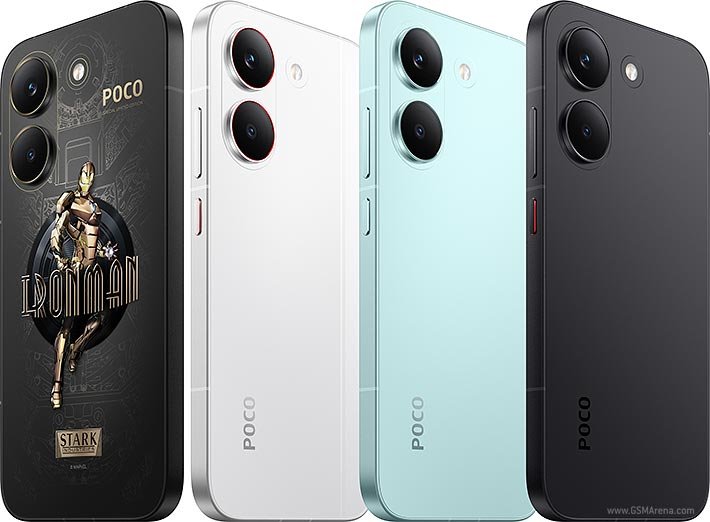
| Available colors different color choices that are ready for you to buy or pick for a product. | China: Xiangyun White, Shadow Black, Light Sea Cyan; India: Turbo White, Nitro Blue, Asphalt Black Mint Green, White, Black |
Extras
| Biometrics Biometrics refer to the measurement and statistical analysis of unique physical and behavioral human characteristics used for identification and verification. | Under-display fingerprint Optical in-display fingerprint |
| Audio Audio means sound, or the recording, transmission, and reproduction of sound within the range of human hearing. | No FM radio; no 3.5mm jack listed; speaker setup not listed Stereo speakers |
|
New Arrivals










Popular Posts