










Poco launched the X8 in India on September 4, 2026, and sales began September 11 on Flipkart and Poco’s own site. It sits below the X8 Pro and X8 Pro Max, next to the X8 Power. You get a 6.83-inch 1.5K AMOLED screen, a Snapdragon 6s Gen 4 chip, a 9,000mAh battery and IP66, IP68, IP69 and IP69K ratings, all for Rs. 29,999.
That price is notable this year. The ongoing RAM shortage has pushed phone prices up, and several brands have delayed their cheaper models.
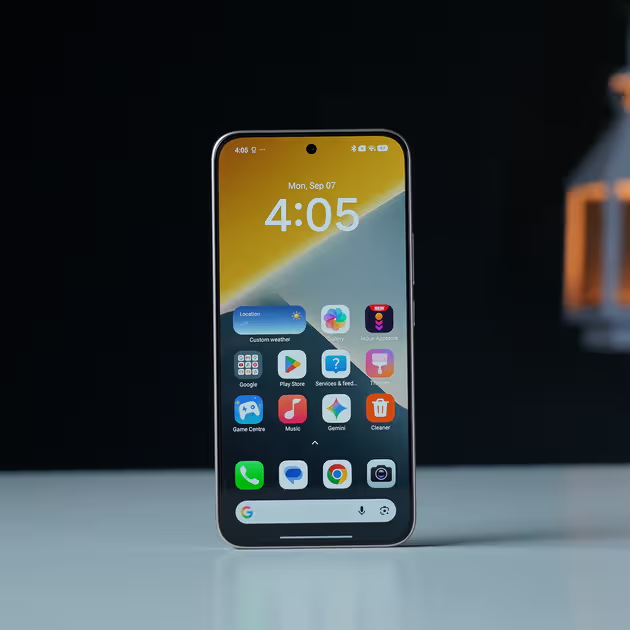
Poco X8 specifications
| Feature | Details |
|---|---|
| Display | 6.83-inch 1.5K AMOLED, up to 120Hz |
| Chipset | Snapdragon 6s Gen 4 (4nm) |
| RAM and storage | 6GB + 128GB, 8GB + 128GB, 8GB + 256GB |
| Rear camera | 50MP main (f/1.8) + 2MP depth |
| Front camera | 16MP |
| Battery | 9,000mAh, 67W wired charging (charger included) |
| Software | Android 16, HyperOS 3 |
| Updates | 4 years of OS updates, 6 years of security patches |
| Protection | IP66, IP68, IP69, IP69K |
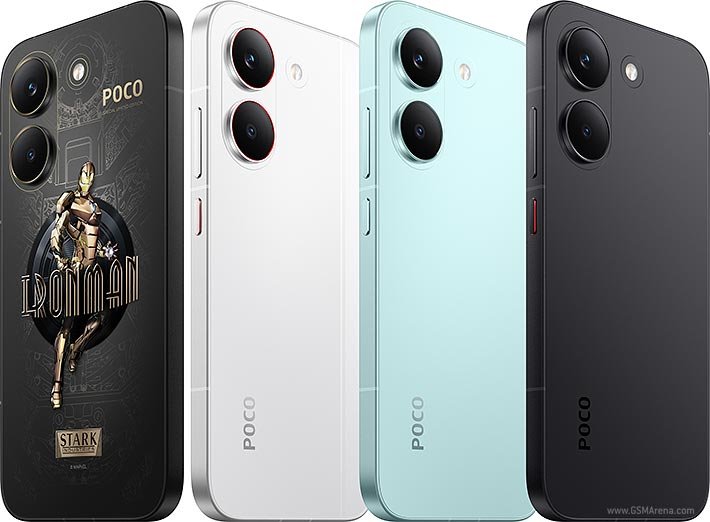
| Colours | Black, Frost White, Fiery Orange |
| Size and weight | 163.45 x 78.27 x 8.6mm, 223g |
| Starting price (India) | Rs. 29,999 |
Design and build
The X8 is big and heavy. It weighs 223g and is 8.6mm thick, and most of that comes from the battery. I didn’t mind it at this price. The flat mid-frame feels solid, the buttons are easy to reach on the right edge, and you can still use it one-handed.
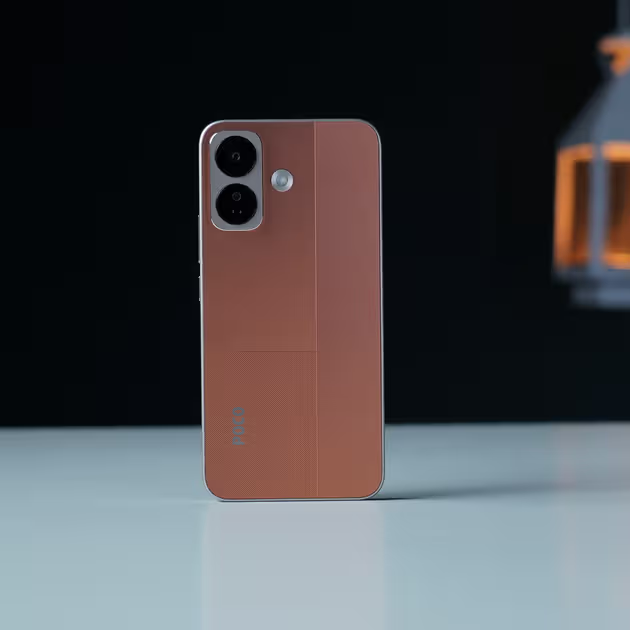
The back panel is split into three zones: a glossy section, a dotted mesh in the bottom-left, and vertical stripes down one side. None of it has any texture, so it looks rough and feels smooth, which is a little odd in the hand. The Fiery Orange unit is a muted orange with a gold frame, and it looks better than the loud colours most phones in this range use.
The camera island sits in the top-left corner and sticks out enough that the phone rocks on a table. A case fixes that.
Display
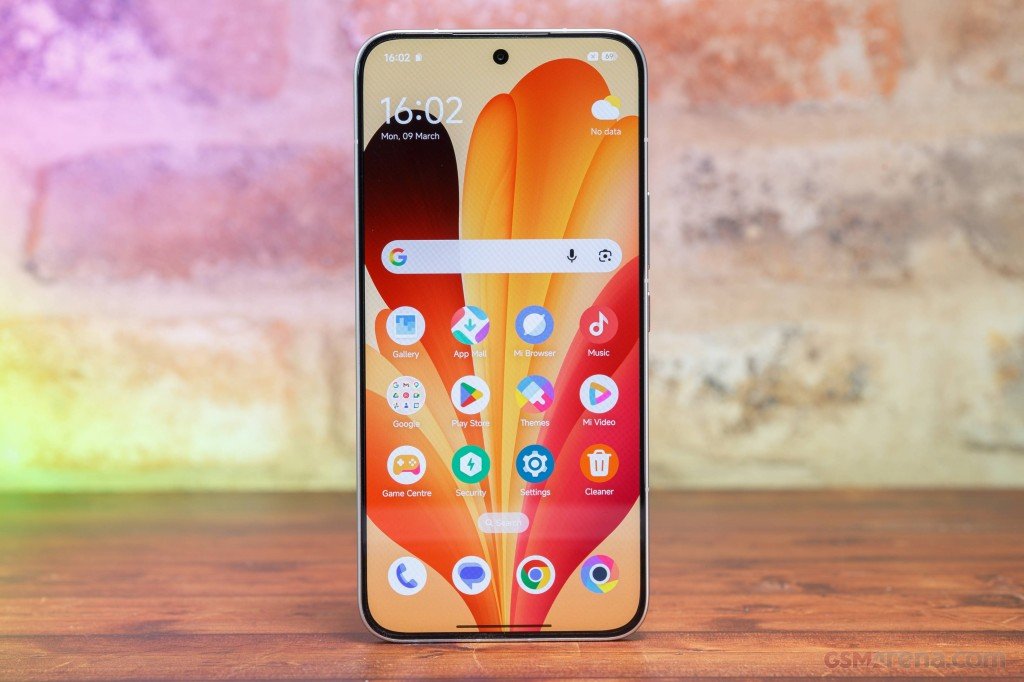
The 6.83-inch AMOLED panel runs at 1.5K and up to 120Hz. In practice, 120Hz only kicks in for things like gaming. Everyday use sits at 60Hz or lower. The screen is sharp, but it has a warm yellow tint even with night mode off, and contrast and colour accuracy are only passable.
Streaming on Jio Hotstar and Netflix looks fine, though Netflix doesn’t play HDR on this phone. Blacks are deep.
Performance and benchmarks
The Snapdragon 6s Gen 4 is a 4nm octa-core chip with four Cortex-A78 cores at up to 2.4GHz and four Cortex-A55 cores at 1.8GHz. The Poco X7 used the Dimensity 7300 Ultra, whose efficiency cores run at 2.0GHz. Those slower cores handle most of your daily tasks, so this is the phone’s weakest spot.
It still feels smooth. I saw no stutter in the UI, cold boot takes 10 to 15 seconds, and switching between apps is quick.
| Benchmark | Poco X8 | OnePlus Nord CE 6 | Redmi Note 17 5G |
|---|---|---|---|
| Display resolution | 1.5K | 1.5K | FHD+ |
| Chipset | Snapdragon 6s Gen 4 | Snapdragon 7s Gen 4 | Snapdragon 4 Gen 4 |
| AnTuTu v10/11 | 936,842 | 1,156,283 | 588,352 (Lite) |
| PCMark Work 3.0 | 12,037 | FTR | 10,852 |
| Geekbench 6 single-core | 1,019 | 1,080 | 897 |
| Geekbench 6 multi-core | 2,981 | 3,171 | 2,178 |
| Geekbench 7 single-core | 894 | – | 784 |
| Geekbench 7 multi-core | 2,669 | – | 1,231 |
| Geekbench AI CPU (Quantized) | 2,095 | 1,431 | 992 |
| Geekbench AI GPU (Quantized) | 663 | 755 | 270 |
| 3DMark Wild Life | 2,955 | 4,355 | 769 |
| 3DMark Wild Life Unlimited | 2,977 | 4,427 | 774 |
| 3DMark Steel Nomad Light | 277 | 405 | NA |
The X8 beats the Redmi Note 17 5G in every test and falls behind the Nord CE 6, most clearly in graphics.
Gaming
Temple Run 2, Subway Surfers and Angry Birds run without trouble. Call of Duty Mobile and BGMI are playable at medium settings, with a few frame drops you’d barely notice. Google Maps and long 1080p video recording are smooth. The phone gets warm if you do both at once outdoors, but in an air-conditioned room I saw no heat problems.
Software
HyperOS 3 on Android 16 is smooth and has a handful of AI features. It also comes with the usual preinstalled apps. Poco promises four years of OS updates and six years of security patches, which is more than most phones near Rs. 30,000 offer.
Camera
The rear setup is a 50MP f/1.8 main sensor and a 2MP depth sensor that does very little. In bright daylight the main camera gives sharp, detailed shots. It struggles in a few cases:
- Scenes with many shades of one colour, like foliage, come out noisy.
- Small text, such as on a digital board, turns to mush when you zoom in.
- Low-light photos are overexposed with weak saturation, and some look almost monochrome.
- Lens flares and deep shadows are handled badly.
The 16MP selfie camera is better. It holds detail in daylight and at night, and skin tones look right.
Battery and charging
The 9,000mAh silicon-carbon battery is the reason to buy this phone. It lasted about two days of normal use, with roughly 9 hours of screen-on time. It ran a little over 24 hours in the PCMark Battery Life test.
Charging is 67W wired, and the charger comes in the box. The phone reaches 43% in 30 minutes and 76% in an hour. A full charge took about 1 hour 31 minutes, which is slower than I expected from a 67W phone.
Price in India and alternatives
The Poco X8 costs Rs. 29,999. Within the brand, the Poco X8 Power at Rs. 35,999 adds a Snapdragon 6 Gen 5, a 10,000mAh battery and 100W charging. Among rivals, the OnePlus Nord CE 6 is faster in benchmarks, and the Redmi Note 17 5G is slower. Phones from Motorola and Infinix in this range have their own problems with cameras, software or longevity.
Verdict
Buy the Poco X8 for the battery, the build and the long update promise. Skip it if you want a good camera or the best gaming performance, because those need a bigger budget.
Pros
- 9,000mAh battery that lasts two days
- IP66, IP68, IP69 and IP69K protection
- 4 years of OS updates and 6 years of security patches
Cons
- Main camera is inconsistent, especially in low light
- Snapdragon 6s Gen 4 is a downgrade from the Poco X7’s chip