



- Home
- Catalog
- Xiaomi Smart Bands
- Xiaomi Smart Band 11
Xiaomi Smart Band 11
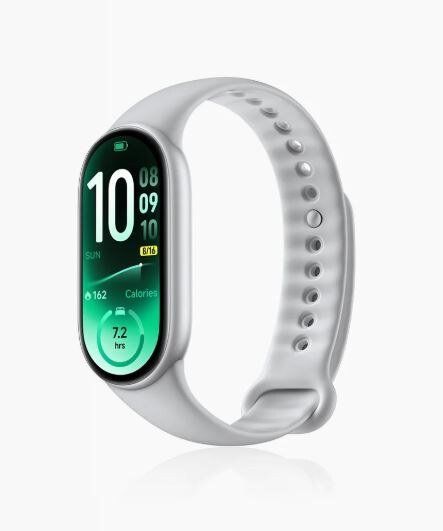
- Display type: AMOLED
- Screen size: 1.72 inches
- Battery Capacity: 233 mA
- Minimum Android and iOS versions: Android 8.0, iOS 14.0
PROS
- 1.72-inch AMOLED display with 2,000 nits peak brightness
- Up to 21 days of rated battery life
- 5ATM water resistance in a 9.99 mm body
CONS
- Higher regional prices than the Smart Band 10, with NFC only on the pricier variant
- Global availability and local pricing not yet confirmed in many markets
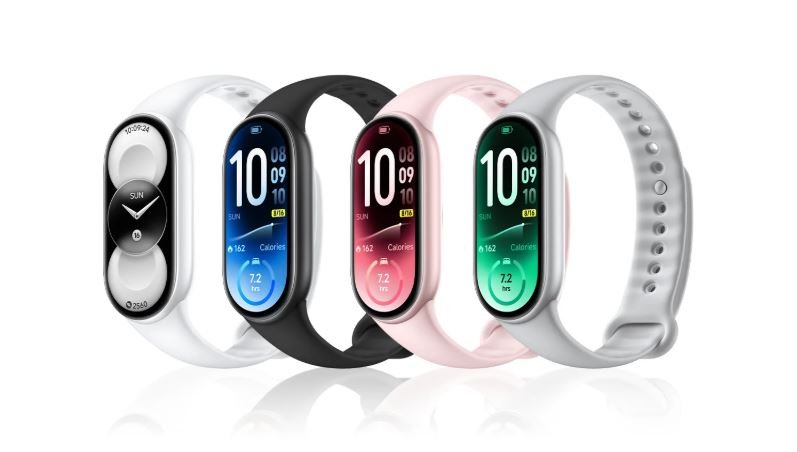
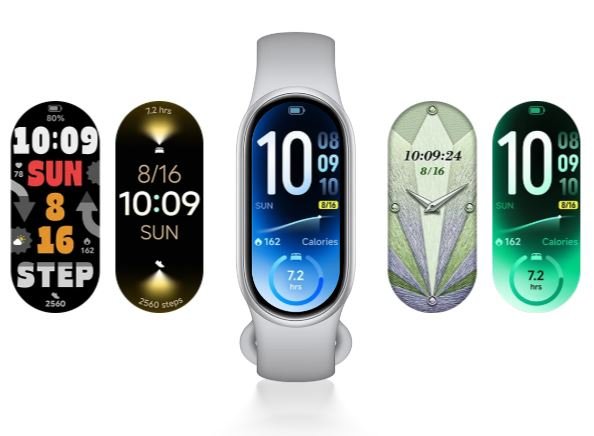
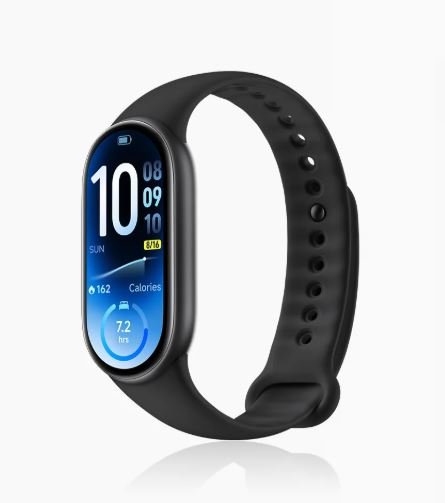
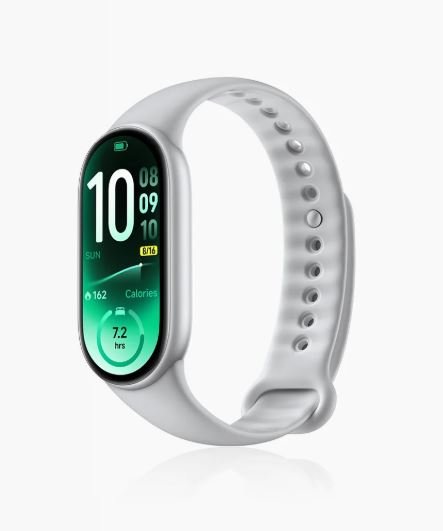
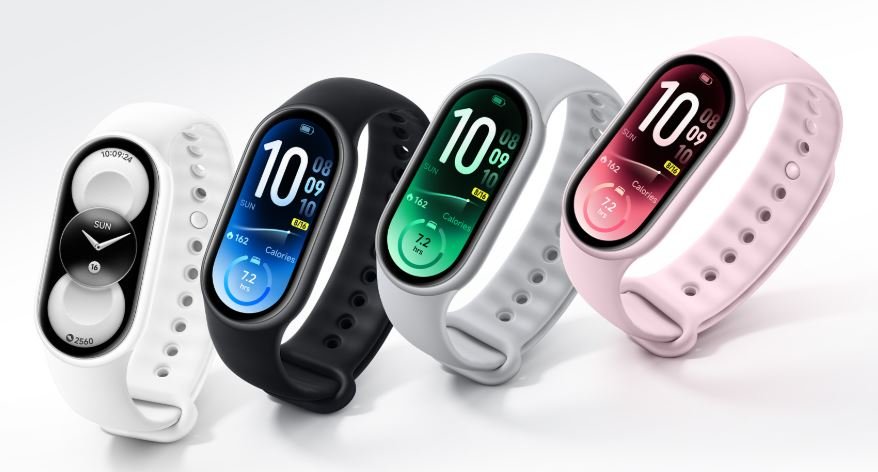
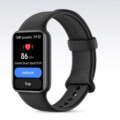
The Xiaomi Smart Band 11 is a budget fitness band with a 1.72-inch AMOLED display and 2 mm bezels. The body is 9.99 mm thick and weighs 15.58 g without the strap. It comes in standard, NFC, ceramic and all-metal versions, is rated 5ATM, and works with Android and iOS. It is also the first wearable announced with HyperOS 4. Compared with the Smart Band 10, the screen is brighter (2,000 nits peak), the body is thinner, and sleep tracking now includes HRV.
Xiaomi rates the battery at up to 21 days per charge. That is a manufacturer estimate, and the always-on display, NFC or continuous heart-rate and sleep monitoring will shorten it. Retailer spec sheets list the capacity as 233 mAh, but the figure comes from a third-party listing and Xiaomi hasn’t confirmed it.
In China the standard version launched at 299 yuan, with an opening sale price of 289 yuan (about $43). NFC is 339 yuan (about $50). The ceramic and metal editions are 399 yuan (about $60). Outside China it has shown up on Xiaomi’s Hong Kong and South Korea sites, with Europe expected next, and prices there are higher than the Smart Band 10’s. It fits people who want basic tracking and long battery life and have no need for a full smartwatch. Inside Xiaomi’s lineup it sits next to the Smart Band 10 and the Smart Band 10 Pro, which has a wider screen and a bigger battery. Elsewhere, the Samsung Galaxy Fit3 and the Amazfit Band 7 compete with it. The closest match is the Huawei Band 10, which lands in a similar price and battery range.
Xiaomi Smart Band 11 Images
Full Specifications
Identity and variants
| Full Model Name A full model name is the complete, specific designation of a product, software, or system that includes its brand, series, version, and technical configuration. | Xiaomi Smart Band 11 (variants: NFC, Ceramic Edition) |
| Release date A release date is the specific day when a product, service, or official piece of information becomes available to the public | China on September 3, 2026; outside China, first in October 2026 |
| Regional availability Regional availability means that a specific cloud service, software, product, or feature is officially supported and running in a designated geographic area or cloud region | Europe (Spain confirmed first), China, South Korea and Hong Kong |
| Price A price is the amount of money or other compensation that a buyer gives to a seller to acquire a product or service | €59.99; NFC version €79.99 (Spain); CNY 299 in China |
Display For SmartBand
| Display type A display type means either large, stylized typography used for headlines and advertisements or the specific electronic screen technology (like LCD or OLED) used on a digital device | AMOLED touch display |
| Screen size Screen size is the physical diagonal measurement of a display area, usually calculated from one corner to the opposite corner and expressed in inches. | 1.72 inches |
| Resolution The measure of sharpness and detail in a digital photo, video, or screen, usually counted in pixels or dots per inch (DPI). | 212 x 520 pixels |
| HBM brightness HBM brightness stands for High Brightness Mode brightness. It is the maximum luminance level a smartphone or display screen can automatically hit for the entire panel when you step outside into strong sunlight or harsh lighting. | 1,500 nits |
| Auto brightness Auto-brightness is a feature on electronic devices—such as smartphones, tablets, and laptops—that automatically changes your screen's light level based on the environment around you. | |
| Always-on display An always-on display (AOD) is a smartphone and smartwatch feature that keeps a small part of the screen active to show basic information—like the time, date, battery level, and notifications—even when the device is locked and asleep. |
Design and build
| Dimensions A dimension is a measurement in a specific direction (such as length, width, or height) or a distinct aspect, feature, or scope of a situation. | 47.44 × 23.66 × 9.99 mm (Ceramic Edition: 47.76 × 23.89 × 9.99 mm) |
| Weight Weight is the downward force that gravity exerts on an object. | 15.58 g (NFC: 16 g; Ceramic: 21.45 g) |
| Case material The metal, ceramic, or composite substance used to build the exterior housing that protects the internal movement and dial. | Metal (standard); ceramic (Ceramic Edition) |
| Strap material and interchangeability Watch strap materials are the physical substances used to make the band that holds a timepiece to your wrist, while interchangeability means the ability to easily remove and swap those straps without buying a new watch. | TPU (Ceramic Edition: fluororubber) |
| Strap length or wrist size range Strap length and wrist size range tell you whether a watch strap or bracelet will fit your arm comfortably without being too tight or too loose | 135–210 mm |
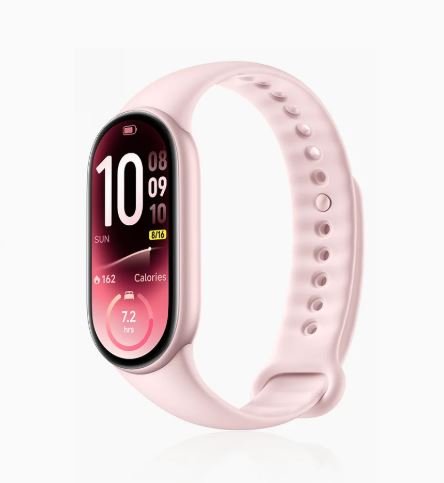
| Available colors different color choices that are ready for you to buy or pick for a product. | Midnight Black, Glacier Silver, Mystic Rose (Ceramic: Pearl White) |
Water resistance
| Rating A rating is a score, measurement, or classification that evaluates the quality, popularity, status, risk, or performance of something or someone | 5ATM |
| Test standard A test standard (or standardized test) is an assessment that is administered, scored, and interpreted in a strict, uniform manner. Every test-taker answers the same or equivalent questions under identical conditions, allowing fair and objective comparisons of performance across individuals, schools, or groups. | ISO 22810:2010 |
| Certifier A certifier is a person, organization, or entity that formally verifies, attests to, or guarantees that something is true, genuine, accurate, or meets specific standards and regulations. | No. 68.189.26.06529.01 |
| Usage limits A usage limit is a restriction set by a service, software, or subscription that caps how much of a resource you can use within a specific period. | Rated for 50 m static pressure for 10 minutes; fine for pools and shallow water. Leather, metal and woven straps are not suited to swimming or heavy sweating |
Sensors
| Accelerometer An accelerometer is an electromechanical device that measures proper acceleration—the rate of change of an object's velocity relative to a free-fall or inertial frame of reference. | |
| Gyroscope A gyroscope is a device used to measure or maintain spatial orientation, balance, and angular velocity based on the principle of conservation of angular momentum. | |
| Electronic compass An electronic compass (also called a digital compass or e-compass) is a sensor device that measures the Earth's magnetic field to determine directional heading and digital orientation. | |
| Optical heart rate Optical heart rate (OHR) is a method of measuring heart rate by shining light through the skin to track how blood volume changes with each heartbeat. | |
| SpO2 SpO2 stands for peripheral capillary oxygen saturation. It is an estimate of the amount of oxygen-carrying hemoglobin in the blood, measured as a percentage | |
| Ambient light sensor An ambient light sensor (ALS) is a small photodetector that measures the intensity and brightness of the surrounding light environment. | |
| Skin temperature Skin temperature is the measure of heat on the outermost surface of your body, which typically ranges from 33°C to 37°C (92.3°F to 98.4°F) and is usually lower than your internal core temperature. |
Health and fitness features
| Sleep tracking Sleep tracking is the process of monitoring and estimating how long and how well you sleep using consumer devices like smartwatches, rings, or phone apps. | |
| Stress monitoring Stress monitoring is the process of tracking and measuring your body's physical and mental responses to pressure or challenging situations | |
| Number of sports modes The number of sports modes on a smartwatch or fitness tracker refers to the total count of pre-programmed exercise and activity profiles the device can track. | 150+ |
| GPS / GNSS GPS is the specific satellite navigation system operated by the United States. GNSS is the general, umbrella term for all satellite systems that provide location and time data worldwide. |
Battery and charging For Smartbands
| Battery Capacity Battery capacity is the total amount of electrical energy a battery can store and deliver, functioning much like the size of a fuel tank. | Up to 21 days light use, 10 days normal use, 6 days with always-on display |
| Battery Capacity Battery capacity is the total amount of electrical energy a battery can store and deliver, functioning much like the size of a fuel tank. | Up to 21 days light use, 10 days normal use, 6 days with always-on display |
| Charging method The meaning of a charging method depends on whether you are talking about physics (how an object gets an electric charge), electronics/batteries (how power is supplied to a battery), or business and finance (how service fees or charges are billed) | Magnetic charger |
| Charging Time Charging time is the total length of time required to recharge a battery from empty to full capacity. | About 90 minutes |
Connectivity and compatibility
| Bluetooth version A Bluetooth version is the specific update level of the wireless rules that a device uses to connect and share data | 5.4 |
| NFC NFC stands for Near Field Communication, a short-range wireless technology that lets two electronic devices exchange data when they are placed a few centimeters apart. | |
| Companion app A companion app is a secondary software application—usually for smartphones or tablets—that works alongside a primary device, video game, website, or smart hardware system to extend its features, control, or monitoring capabilities. | Mi Fitness |
| Minimum Android and iOS versions The minimum Android and iOS versions refer to the oldest operating system (OS) releases that a specific mobile app promises to support. | Android 8.0, iOS 14.0 |
User Reviews
More Products from Xiaomi


New Arrivals
-
 Xiaomi Buds 5 Pro
$200.00
-
Xiaomi Buds 5
$100.00
-
Xiaomi Type-C Earphones
$6.00
-
Redmi Buds 6 Active
$20.00
-
Redmi Buds 6 Lite
$20.00
-
Redmi Buds 6 Play
$10.00
-
Redmi Buds 6 Pro
$59.00
-
Redmi Buds 6
$30.00
-
Xiaomi OpenWear Stereo Pro
$150.00
-
Xiaomi OpenWear Stereo
$120.00
-
Xiaomi Buds 6
$99.00
-
REDMI Buds 8 Lite
$27.00







Popular Posts