









The Xiaomi Power Bank 20000 165W is aimed squarely at those people., Power banks used to be emergency phone batteries. The bigger ones now charge tablets, handhelds and laptops, which matters if you travel a lot or spend long stretches away from a socket.
It costs Rs. 5,499 and has a 20,000mAh cell with 165W of combined output. The built-in USB-C cable does up to 120W alone, a second USB-C port adds 45W, and a USB-A port covers older gear. You also get a colour display and 90W recharging.
It’s big, though. At 486g it will not go in a jeans pocket. It lives in a backpack next to your laptop. If you only top up your phone now and then, skip it.
Design and Build
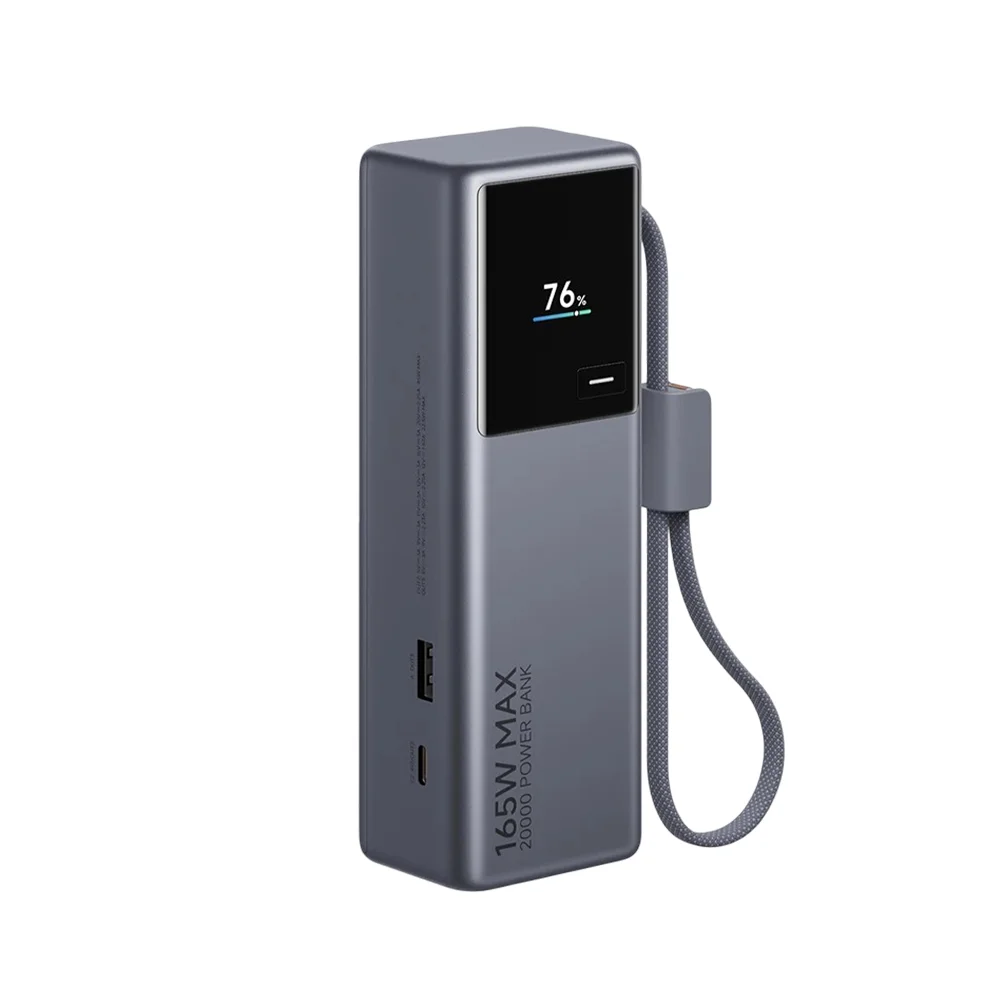
The braided USB-C cable is the best part. It feels sturdier than the rubber ones most power banks ship with, and it loops over a finger for carrying, so there’s no separate cable to pack.
It’s heavy (486g, 15.78cm tall), but the tall, narrow body sits in the hand better than the usual brick. Next to the built-in cable there’s a second USB-C port and a USB-A port.
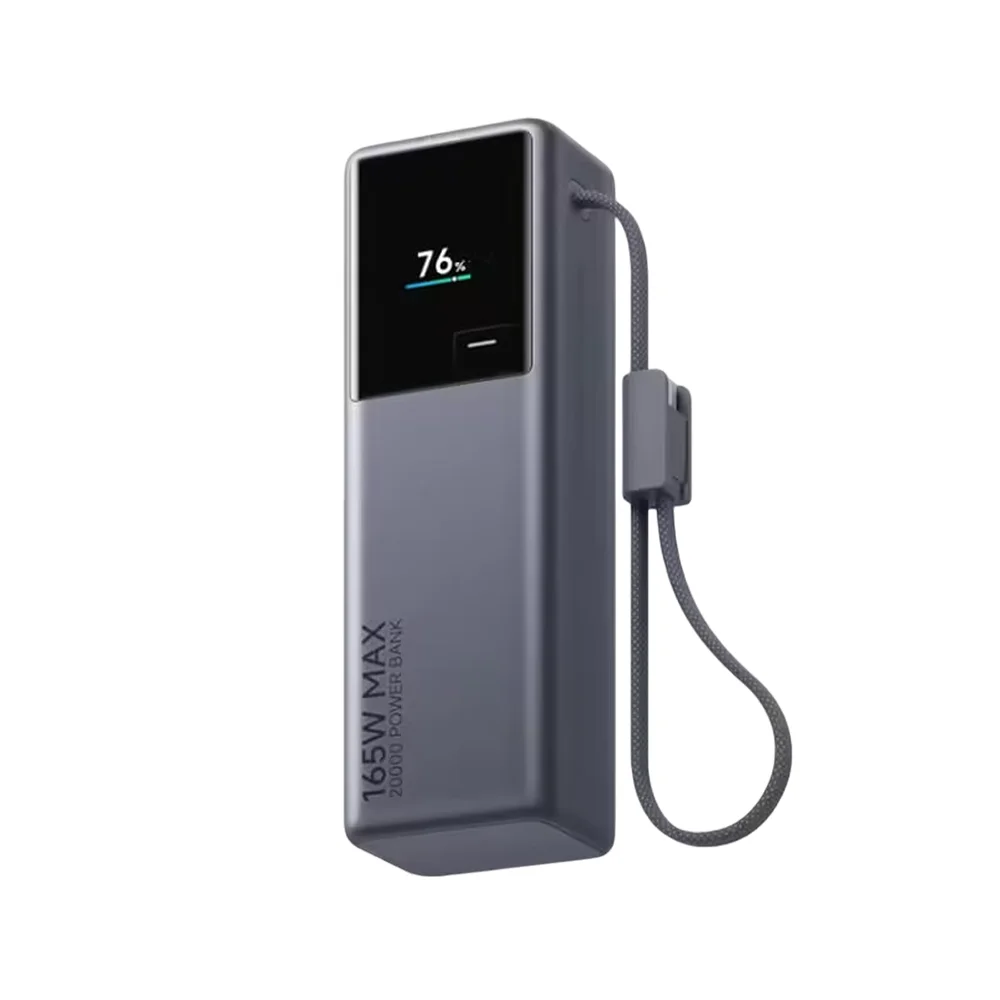
The colour display is a real upgrade on the four-dot indicator. It shows remaining charge, charging or discharging status, and time left. With several devices plugged in, I kept glancing at it.
One annoyance: no wall adapter in the box. Without a good USB-PD or Xiaomi charger you won’t see the full 90W recharge, and refilling a 20,000mAh cell slowly is a chore.
Xiaomi Power Bank 20000 165W Charging Performance
This is the reason to buy it. The Xiaomi Power Bank 20000 165W figure is split across two USB-C connections, 120W from the built-in cable and 45W from the second port. The USB-A port gives 22.5W, fine for earbuds and small accessories. In practice: laptop on the cable, phone on the other port.
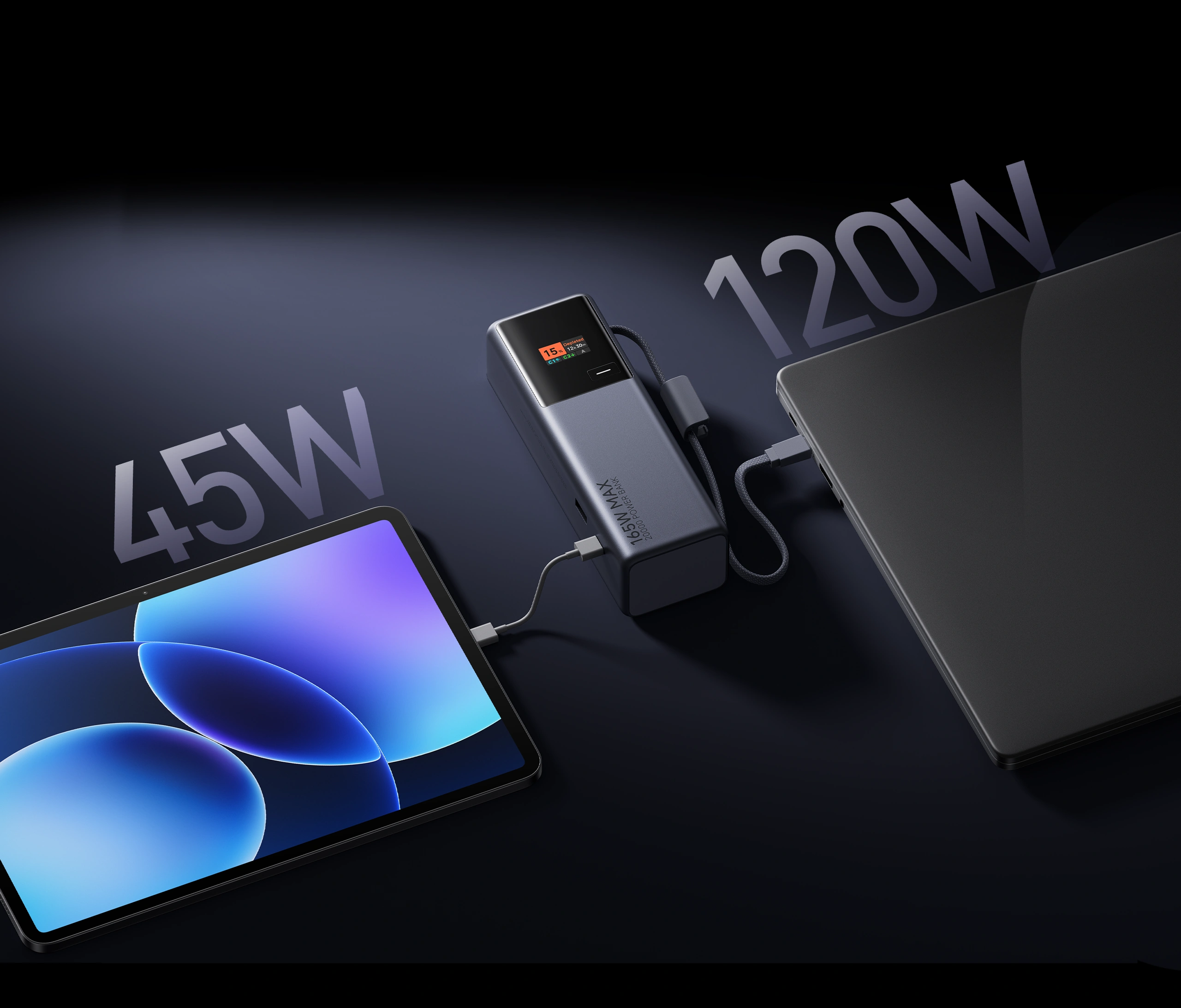
A 120W port doesn’t mean your device charges at 120W. That depends on what the device supports and which protocol it uses. The power bank handles PD 3.0 with PPS and Qualcomm Quick Charge 3.5, so most things will work. Xiaomi’s own devices get the most out of it.
Xiaomi claims an iPhone 16 reaches 56 percent in 30 minutes and a Galaxy S25 Ultra reaches 66 percent. My iPhone 17 Pro Max hit 70 percent in about 40 minutes, which was faster than I expected.
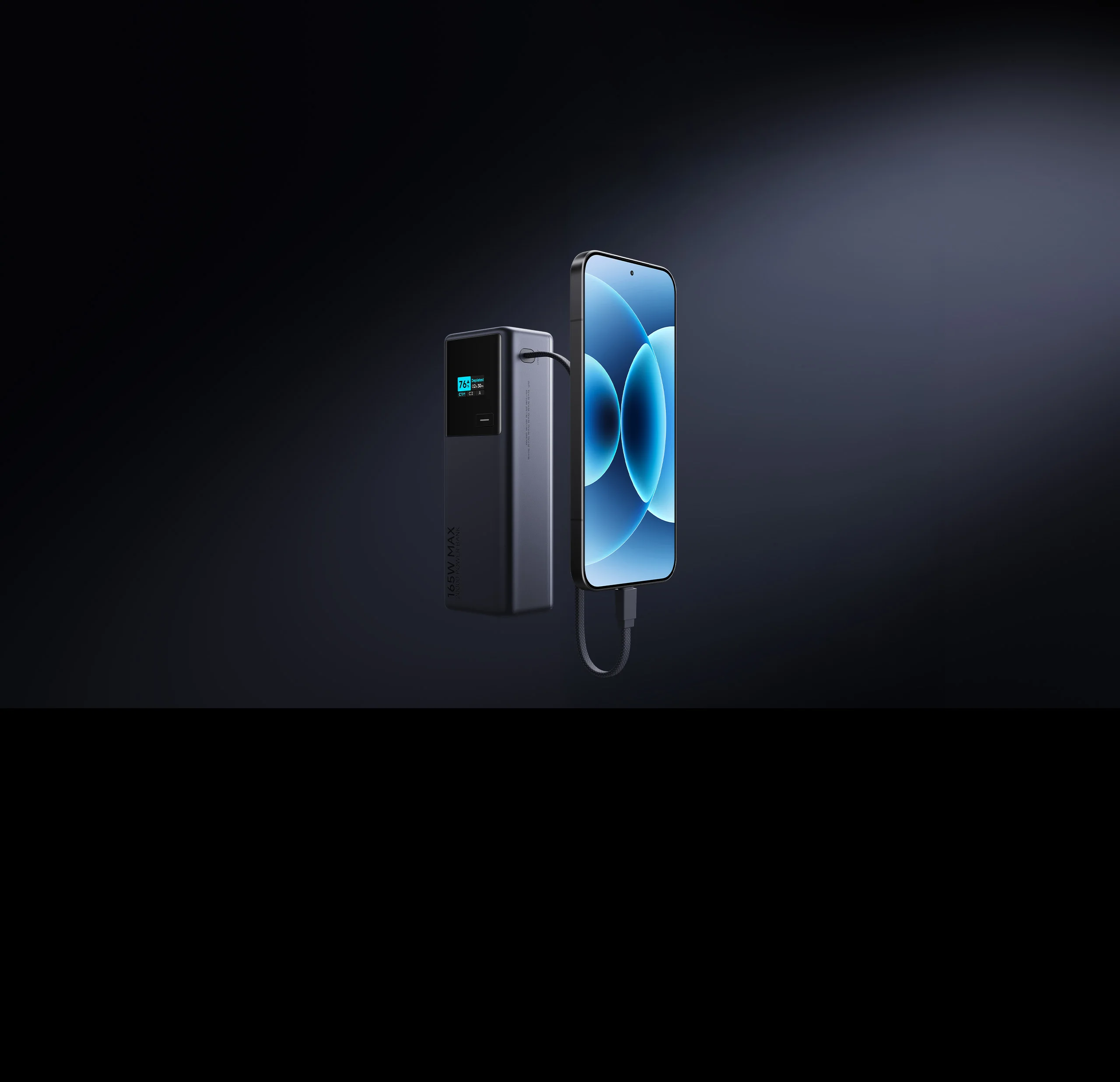
Capacity needs a reality check. The rated figure is 11,000mAh at 5V/7A, or 70.65Wh, because some energy is lost in voltage conversion. Dividing 20,000 by your phone’s battery size will overstate how many full charges you get.
Recharging is quick, too. The built-in cable accepts up to 90W, and Xiaomi says a compatible charger takes it to about 27 percent in 15 minutes. Most batteries this size need hours.
Verdict
If your bag already holds a laptop, a tablet and a phone, this replaces a pile of chargers and cables. The built-in cable is handy, the display tells you what’s happening, and charging a laptop and phone together works well.

For daily phone top-ups, nearly half a kilo is too much, and smaller, cheaper power banks do that job fine. At Rs. 5,499 you’re paying for the extra output rather than the capacity.

Xiaomi Power Bank 20000 165W Rating: 9/10
Pros: fast charging with compatible devices, charges a laptop and phone together, braided built-in cable, useful display, 90W recharging
Cons: heavy at 486g, no charger in the box, overkill if you only charge a phone