







Quick verdict
The Xiaomi 18 Fold review made me think about where foldables are heading. It keeps the passport-style shape I already like and adds a 7.58-inch inner display, a 6,000mAh battery, 67W wired and 50W wireless charging, and a proper 3.5x periscope telephoto. On hardware alone, it’s a very good foldable.
The catch: the software lags the hardware a bit, and the phone is sold only in China. If you can live with the trade-offs of importing, it’s one of the most interesting foldables around. If you want local warranty and support, it’s harder to recommend.
Overall score: 8.3/10, the average of the six category scores below.

Pros and cons
Pros
- Passport-style shape that feels like a normal phone when closed
- Large 7.58-inch inner display with a manageable crease
- 6,000mAh battery with 67W wired and 50W wireless charging
- 3.5x periscope telephoto with OIS, plus a 200MP main camera
- Excellent multitasking (up to six apps plus a floating window)
- Distinctive cherry red design with a metal frame
Cons
- Some third-party apps are not properly optimised for a foldable
- CPU throttling and heat during sustained heavy loads
- Heavier and thicker than the Galaxy Z Fold 8
- Inner screen is a fingerprint magnet and the crease is still visible
- No stylus support
- China-only at the moment, with global launch unconfirmed
Xiaomi 18 Fold specifications
| Specification | Details |
|---|---|
| Display | 5.38-inch cover, 7.58-inch inner (both roughly 2:1) |
| Processor | Xiaomi XRing O3, 10-core |
| CPU clock speed | Up to 4.36GHz |
| RAM | 16GB (Geekbench reading); 1TB model uses LPDDR6, lower storage uses LPDDR5X |
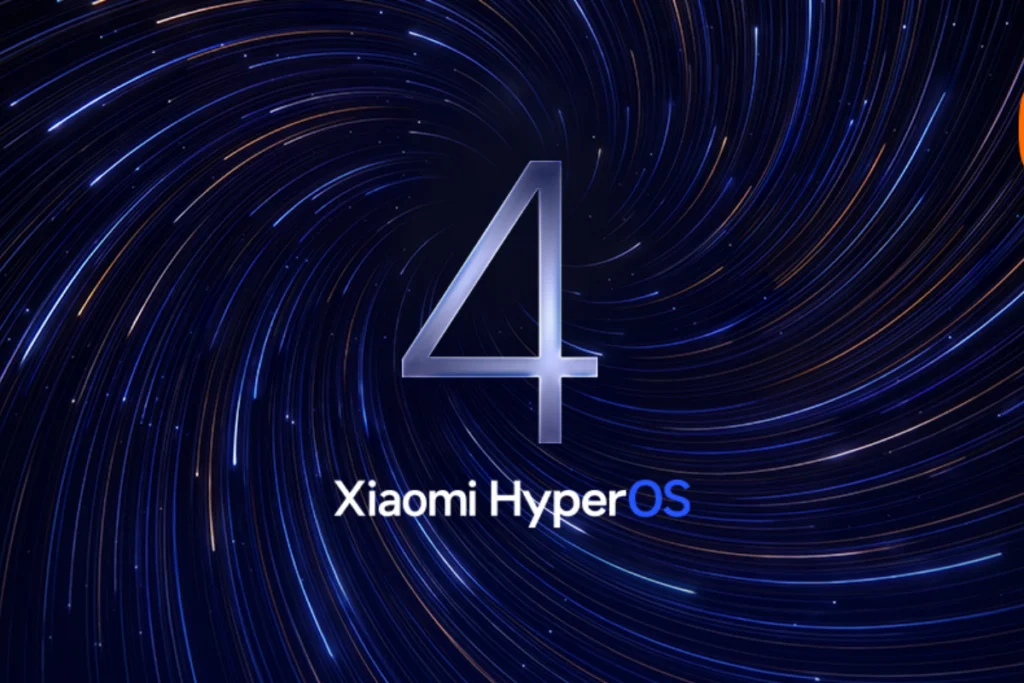
| Software | HyperOS 4, Android 17 |
| Rear cameras | 200MP main (OIS), 50MP ultra-wide, 50MP telephoto (OIS) |
| Optical zoom | 3.5x |
| Digital zoom | Up to 100x |
| Front cameras | 16MP on cover and inner displays |
| Video | Up to 8K at 24fps (rear), 4K at 60fps; 1080p (front) |
| Battery | 6,000mAh |
| Wired charging | 67W |
| Wireless charging | 50W |
| Weight | ~219g |
| Folded thickness | 10.68mm |
| Build | Metal frame |
| Colours | Cherry red, black, white |
| Cover glass | Xiaomi Dragon Crystal Glass 3.0 |
| Inner display protection | Dual-layer ultra-thin glass (UTG) |
| Stylus support | No |
| Availability | China; global launch unconfirmed |
Xiaomi 18 Fold vs Galaxy Z Fold 8
| Xiaomi 18 Fold | Galaxy Z Fold 8 | |
|---|---|---|
| Weight (approx.) | 219g | 201g |
| Folded thickness | 10.68mm | 9.7mm |
| Shape | Wider, passport-style | Taller |
| Battery | 6,000mAh | Real-world endurance differed noticeably in my use |
| Inner display | Good, visible crease | More mature, less distracting crease |
| App optimisation | Uneven | More mature |
| Availability | China only | Widely available |

Where foldables stand
Foldables have changed. The early ones were demonstrations: could a phone become a tablet without breaking in half or making you regret the purchase every time you opened it? The folding mechanism is no longer the headline. Makers now compete on proportions, cameras, battery life, software and thermals, and on how much of an ordinary phone they can keep while giving you a bigger screen.
What struck me first about the Xiaomi 18 Fold wasn’t the processor or the camera count. It was the shape. Xiaomi went with a passport-style outer display, which I’ve always preferred to the very tall, narrow cover screens some foldables use. Closed, I want a normal phone: type, scroll and check messages without feeling like I’m holding a TV remote. Open, I want a much bigger canvas. The Xiaomi 18 Fold does both.
The cover display is 5.38 inches and the inner one 7.58, both at roughly 2:1. That gives the phone a different feel from a slab, and I think it makes more sense than chasing extreme narrowness.
It also lands in a more crowded market, with Samsung’s Galaxy Z Fold 8 already established and Apple entering the category with the iPhone Duo. After my time with it, I think Xiaomi got a lot right and still has homework to do.
Xiaomi 18 Fold review – Design and build
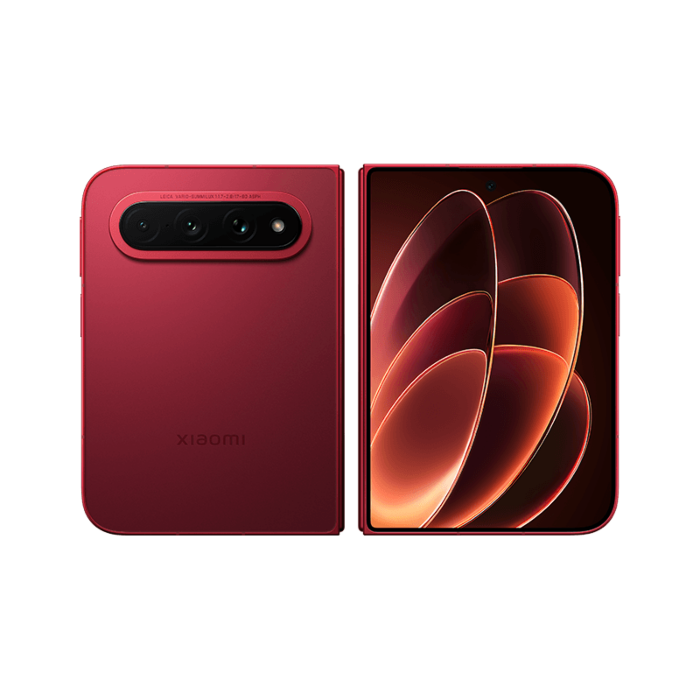
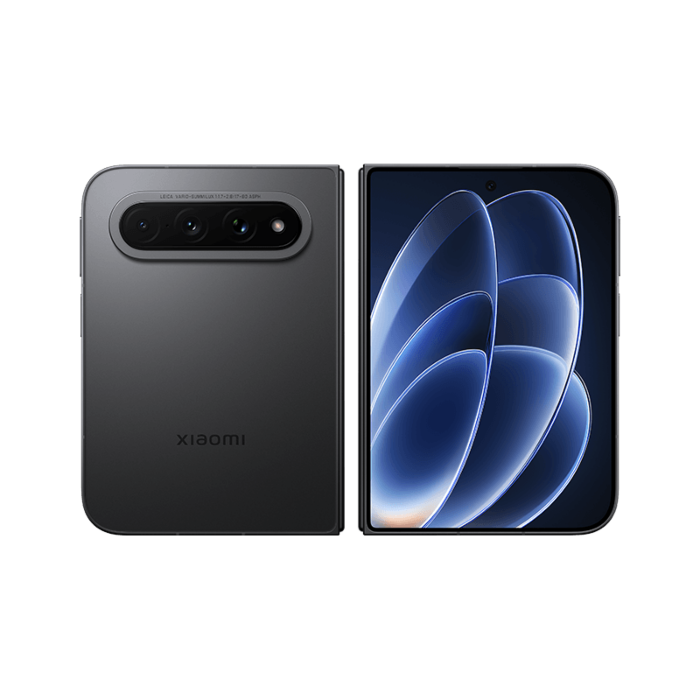
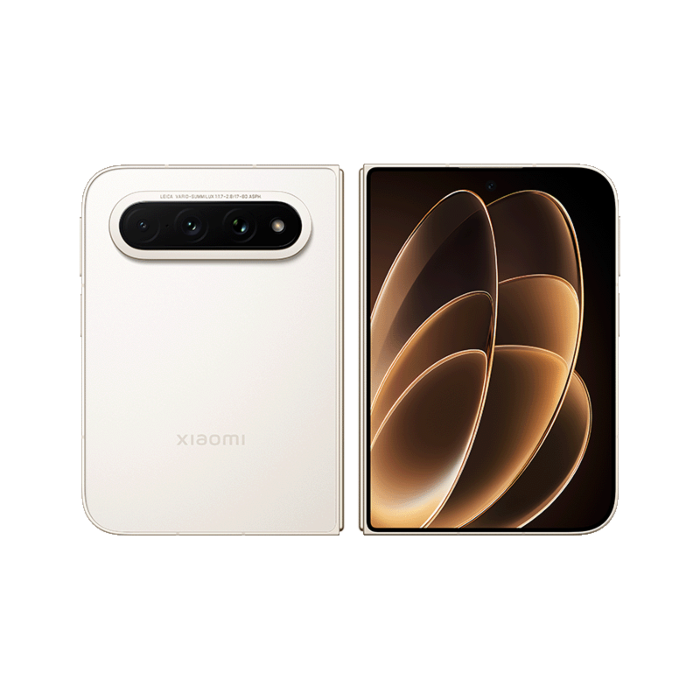
The Xiaomi 18 Fold is a really good-looking phone, and I say that as someone who usually cares more about function than flashy finishes. The deep cherry red on my unit grabbed my attention immediately. A matching metal frame gives it far more personality than the sea of black, silver and grey foldables dominating the market. Black and white versions exist too, but if I were spending my own money, I would pick the red.
Proportions
The more important part of the design is the proportions. Folded, the phone keeps the passport-style shape I have come to appreciate. The corners are also more rounded than on Samsung’s Fold line, so the unfolded phone looks softer and less aggressively boxy. It sounds like a small detail, but proportions decide whether a foldable feels natural in the hand, and the Xiaomi 18 Fold does not feel awkward.
Weight and thickness
It is not, however, particularly thin or light. The Galaxy Z Fold 8 is around 201g and 9.7mm folded, while the Xiaomi 18 Fold is around 219g and 10.68mm. Xiaomi loses the spec-sheet battle here. Side by side, I can tell which is heavier and thicker, but in daily carrying and use I never felt like I had a small brick in my pocket.
Xiaomi has made a clear decision: rather than shave every last millimetre, it has used the room for a large battery and substantial hardware. For a foldable, I think that is a reasonable trade-off. The phone is also wider than the Galaxy Z Fold 8, which is taller, and I prefer Xiaomi’s proportions because the outer display feels more like a conventional phone. That helps for quick tasks like reading a message, since I don’t have to unfold it first.
The hinge and folding mechanism feel premium, and the phone feels cohesive both closed and open.
Fingerprints
One compromise I noticed repeatedly is that the inner screen is a fingerprint magnet. I could wipe it clean and a short session later the smudges were back. This is made worse by how large and uninterrupted the surface is. It is not Xiaomi-specific, but it is something every foldable buyer has to accept.
Overall I like the design a lot. It isn’t the thinnest or lightest foldable around, but it doesn’t feel like a compromise.
Design score: 9/10
Xiaomi 18 Fold review – Display
Displays are the main reason to buy a foldable, and Xiaomi has given me two screens that are genuinely useful rather than treating the outer display as an emergency backup. The cover screen measures 5.38 inches and the inner panel 7.58 inches. Both follow the same 2:1 philosophy, which makes moving between them feel natural.
Cover display
I use the cover display as a normal smartphone screen, and this is where the passport-style approach pays off. It is wide enough to type on and comfortable for everyday tasks, so closing the phone never feels like a downgrade.
Inner display
Open it and the experience changes completely. The 7.58-inch screen is far larger, and the extra space helps with everything from reading to multitasking. The two screens use different glass technologies: the cover uses Xiaomi Dragon Crystal Glass 3.0, while the folding panel uses a newer dual-layer UTG construction.
The crease
And yes, there is still a crease. I think foldable makers have reached the point where pretending creases don’t exist is silly. They do. The good news is that the Xiaomi 18 Fold’s crease is nowhere near as dramatic as on early foldables. I can see it from certain angles and feel it when I run a finger across the centre, but it does not dominate the experience.
Still, judged on the crease alone, I prefer what Oppo did with the Find N6, which was among the first brands to try the passport-style design. I also prefer the Galaxy Z Fold 8’s inner display overall: Samsung’s panel feels more mature and its crease is less distracting day to day. Brightness is not a major issue on the Xiaomi. The bigger issue is the practical reality of keeping such a huge folding surface clean.
Unlike the iPhone Duo, the Xiaomi 18 Fold has no stylus support. That is not a deal-breaker for me, since I don’t use a stylus daily, but it does weaken the productivity argument slightly.
The display hardware is good, though I don’t think it redefines what a foldable screen can be. The form factor does most of the heavy lifting.
Display score: 9/10
Xiaomi 18 Fold review – Software and multitasking
This is where my experience became more complicated. I like HyperOS 4, but software is also the area where Xiaomi most needs to polish. The hardware clearly knows it is a foldable. The software sometimes seems to forget.
App optimisation
In some situations, rotating the phone makes apps suddenly oversized in portrait. Other apps behave differently on the cover and inner displays. TikTok can crop differently from screen to screen, Instagram Reels behaves better on the cover display, and Facebook on the inner display doesn’t feel fully optimised. YouTube adapts much better.
This isn’t entirely Xiaomi’s fault. Third-party developers need to make specific adjustments for different aspect ratios, orientations and screen configurations, and even Samsung, after years in this category, cannot force every developer to optimise every app. But as a user, that distinction doesn’t matter much. If an app behaves strangely, I experience it as a problem with my phone. Beautiful hardware is only as good as the apps you launch every day.
Six apps at once
Where Xiaomi absolutely flexes is multitasking. HyperOS 4 can run up to six apps at once on the inner display, with an optional floating window on top. Technically, that is ridiculous, and I mean it as a compliment.
I tried it, of course. After the novelty wore off, I settled back to two or three apps at once. Maybe I’m not ambitious enough, or maybe there is a secret society of foldable power users running six apps at once while managing a spreadsheet, watching YouTube, answering WhatsApp and conducting international diplomacy. I’m not one of them. Still, I appreciate the option, and two or three apps side by side is genuinely useful: browsing while taking notes, keeping a chat open while working in another app, or watching a video while doing something else.
This is where the large inner display earns its keep. The multitasking tools are more mature than the way some individual third-party apps adapt to the screen, which makes the software feel like a work in progress rather than a finished product.
Software score: 8/10
Xiaomi 18 Fold review- Performance and benchmarks
The Xiaomi 18 Fold runs on Xiaomi’s own XRing O3 rather than Qualcomm’s latest Snapdragon. That’s a notable choice: Xiaomi wants more control over its hardware stack instead of buying a flagship chip off the shelf. It’s a big part of why I find this phone interesting.
Everyday use
In daily use, the result is what I would expect from a modern flagship. Apps open quickly, scrolling is smooth, multitasking is responsive and switching between apps never feels like the phone is struggling. The large inner display makes the speed feel even more useful because you naturally run more apps at once.
There is one RAM detail worth knowing: the 1TB version gets LPDDR6 RAM, while the lower-storage configuration uses LPDDR5X. I tested the LPDDR6 unit, and it was a very quick phone.
Benchmarks
This is my first experience with the XRing O3. In Geekbench 7, it scored 2,635 single-core and 10,336 multi-core, showing strong CPU capability across its 10 cores. The reported configuration is two cores up to 4.36GHz, four at 3.69GHz and four at 3.15GHz, a tiered layout that spreads different workloads across clusters.
Peak performance is only half the story, though. My sustained CPU tests showed a noticeable drop after the initial burst, with performance settling at a lower level for the rest of the workload.
Heat and throttling
The thermal tests are where I became more cautious. Battery temperature reached 50.1°C, and the monitoring app estimated CPU temperature at 52.3°C. These readings come from a monitoring session, not a controlled laboratory protocol, but they indicate the phone was dealing with considerable heat.
The CPU Throttling Test recorded a slowdown of up to 67% in one run and 68% in another. The graphs show an initial burst followed by a sharp reduction, after which throughput stays at a lower, fairly stable level. This suggests the thermal and power management systems are limiting sustained output to keep the workload running.
The app’s own summary metrics (48% and 34%) and the selected-value slowdown readings (67% and 68%) describe different aspects of the test and should not be treated as interchangeable. I also couldn’t get a usable 3DMark result because the app failed to connect to its servers, so I can’t draw a firm conclusion about sustained GPU performance.
Gaming
Foldables have an inherent thermal challenge: more hardware in a tightly constrained chassis. During longer gaming sessions, the Xiaomi 18 Fold gets warm. That isn’t unique to Xiaomi; it is part of the form factor. For short sessions of games like PUBG, I have no major complaints. But if you are buying this phone to push demanding games at maximum settings for hours, pay closer attention to thermal behaviour than you would with a conventional flagship.
The gaming dock gives quick access to performance controls without leaving the game. The floating panel shows a live frame rate, CPU and memory usage, and separate Balanced and Performance modes. You also get options for enhanced visuals, touch controls, network speed optimisation and memory management, plus shortcuts for voice changing, screenshots and screen recording.
What it means in daily use
For ordinary tasks, very little changes. Browsing, messaging, video and app switching involve short bursts of processing that the XRing O3 handles comfortably. Extended gaming, sustained video processing and other heavy workloads are more likely to expose the thermal limits. Whether software scheduling or the physical cooling system is mostly responsible is something these tests alone cannot establish, but I would like to see Xiaomi refine both through updates.
I wouldn’t call the XRing O3 underpowered. It is a promising first-generation chip whose sustained performance needs more attention, especially in a foldable.
Performance score: 8/10
Xiaomi 18 Fold review – Cameras
The camera system is one of the Xiaomi 18 Fold’s biggest hardware advantages, especially for someone who gets annoyed when flagship foldables cut corners on telephoto. Foldables have traditionally asked you to make peace with camera compromises, as if the cameras were invited to the flagship party at the last minute. This one makes a fairly convincing case for itself.
Camera setup
- Main: 200MP with OIS
- Telephoto: 50MP periscope with OIS (3.5x optical zoom)
- Ultra-wide: 50MP
- Front (cover and inner): 16MP each
All three rear cameras carry Leica branding, which shapes the colour and look of the images.
Image quality
The main camera produces sharp outdoor photos with pleasing, saturated colour. They can lean slightly bright, but they look attractive without feeling over-edited. Low-light results were a pleasant surprise: indoor scenes, tricky LED lighting and night shots all looked surprisingly good. Portraits held up well, with decent detail and an appealing look. It won’t replace a dedicated camera or necessarily beat the best camera phones, but it is good enough that I wouldn’t want to carry a second phone just for photography.
Telephoto and zoom
The telephoto deserves particular credit. A proper optical zoom on a foldable makes a real difference, whether you’re shooting people, architecture or something you’d rather not cross the street to photograph. Digital zoom reaches 100x, but I’d treat that as a flexibility boast, not a promise of great detail. The ultra-wide is useful, and framing shots on the large inner display is a pleasure.
Selfies with the rear cameras
The foldable party trick that earns its keep: unfold the phone, use the cover screen as a viewfinder and shoot selfies with the rear cameras. The quality difference is immediately obvious, and the Leica colour treatment makes those shots especially appealing. The 16MP front cameras are fine for video calls, but I’d rather use the main cameras whenever possible.
Video
Rear video goes up to 8K at 24fps, and the 4K 60fps footage I shot also looked solid. The front cameras record up to 1080p.
The cameras aren’t class-leading across the board, but they’re versatile and fun to use. For a foldable, that counts as a win.
Camera score: 8/10
Xiaomi 18 Fold review- Battery life and charging
On paper, the battery is almost absurd for a foldable: 6,000mAh, with 67W wired and 50W wireless charging. I appreciate that Xiaomi chose battery capacity over making the phone as thin as possible.
But a big battery does not automatically mean dramatically better endurance than every rival. In my use, battery life differed noticeably from what I got on the Galaxy Z Fold 8. That is less disappointing once you consider what the Xiaomi is powering: two displays (one a large 7.58-inch folding panel), the processor, the cameras, heavy multitasking and background software. Capacity is only one part of the equation. Power efficiency, display brightness, refresh behaviour, chip efficiency and software optimisation all decide how long a phone actually lasts.
Still, given the choice between a 6,000mAh battery and a smaller one in a thinner body, I’ll take the bigger battery. Charging is strong: 67W wired is a fast top-up when you need it, and 50W wireless is handy when working at a desk.
Speakers
The speakers are decent. The only issue is placement: depending on how I hold the phone while unfolded, the sound can feel weighted toward one side. It’s another compromise of a device that physically folds in half, and it never ruined the experience.
Battery score: 8/10
Who should buy it
Buy it if you:
- Want a passport-style foldable that feels like a normal phone when closed
- Value a big battery and fast wired and wireless charging
- Care about a real telephoto camera on a foldable
- Like to multitask on a large inner screen
- Are comfortable importing a phone
Think twice if you:
- Want the most polished app optimisation (Samsung still feels more mature)
- Play demanding games for hours at a time
- Need stylus support
- Want a thin, light foldable
- Want local warranty and easy repairs
Should you buy it?
If you want a conventional smartphone that happens to fold, I’d be cautious. If you specifically want a foldable and don’t mind importing one, it gets much more interesting. What I value most here is the passport-style shape, the large inner screen, the multitasking, the huge battery and the telephoto camera. The 3.5x periscope lens in particular is something I’d miss on any foldable without one. I also like that the phone doesn’t feel tall when closed, and the rounded corners make it feel less industrial than some rivals.
Two things make me hesitate. The first is software. Samsung still feels more mature on foldable optimisation, and I don’t think Xiaomi has fully solved making every app behave across two very different displays. The second is the import situation. If Xiaomi sells the 18 Fold officially in your market with proper warranty and support, my answer is a clear yes. If you have to import it, think hard before spending this much. A foldable is the last kind of phone where you want to find out six months later that repairs are a hassle.
So would I buy it? With official support, I’d seriously consider it. As an imported China-only phone, I’d hold back. The phone itself isn’t the problem. It has a huge battery, powerful hardware, great multitasking and one of the more sensible camera setups I’ve seen on a foldable.
What it needs now is polish: better app optimisation, wider availability and official support. With those, Xiaomi would have a serious contender. Until then, it shows where foldables could go next, and I’d like to see more phones push in this direction.
Xiaomi 18 Fold review Scores
| Category | Score |
|---|---|
| Design and build | 9/10 |
| Display | 9/10 |
| Software | 8/10 |
| Performance | 8/10 |
| Cameras | 8/10 |
| Battery and charging | 8/10 |
| Overall | 8.3/10 |