








Xiaomi Pad 9 vs Xiaomi Pad 9 Pro Max
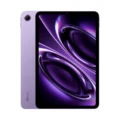
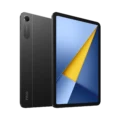
Xiaomi Pad 9 vs Xiaomi Pad 9 Pro Max, Xiaomi makes both, and they sit at opposite ends of its new range. The Pad 9 is the cheap, light one, suited to students, families and anyone who mostly reads, streams and takes notes. The Pro Max is the flagship, built for people who draw, edit or want the tablet to double as a laptop screen. The Pro Max went on sale in China on 7 September, and the Pad 9 opened pre-orders about a week later, so you can now compare the whole line.
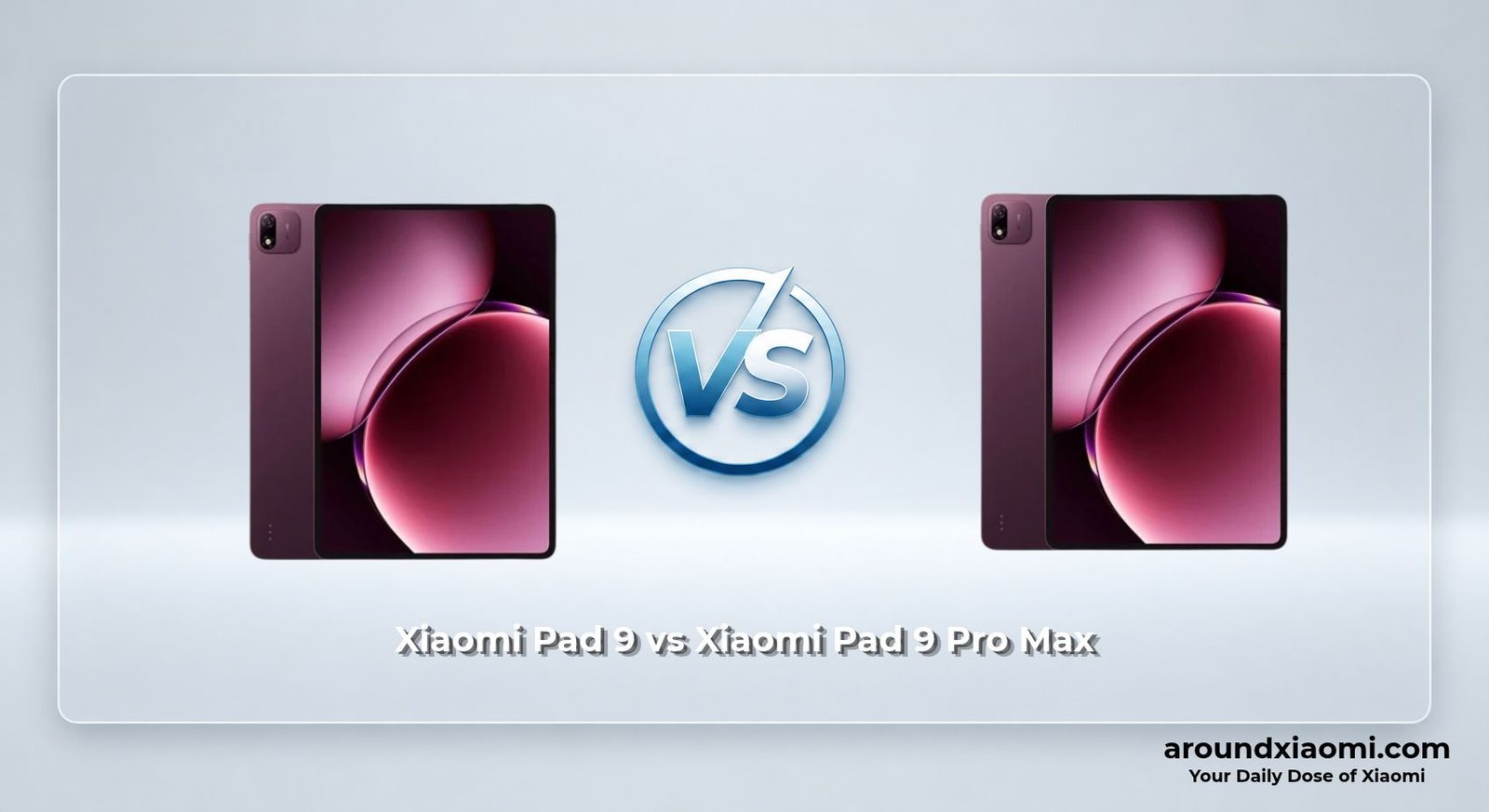
Xiaomi Pad 9 vs Xiaomi Pad 9 Pro Max Specs
On paper, the Pad 9 has an 11.2-inch screen, a Snapdragon 8s Gen 4, a 9,720mAh battery and 45W charging. Its display peaks at 800 nits, it has no fingerprint reader, and it weighs 485g. The Pro Max has a 13.3-inch screen at 3,408 x 2,272 with a 144Hz refresh rate. It runs Xiaomi’s own XRING O3 chip, which scored 5.61 million on AnTuTu, and has a 12,000mAh battery with 120W charging. Its USB-C port also accepts video input, so a laptop can use it as a monitor. I couldn’t find independent battery tests yet, so treat endurance as unproven. The weight gap is real, though: the Pro Max is 645g, and that adds up over a long commute. The Pad 9’s dimmer screen will probably be the first thing you notice outdoors.
Xiaomi Pad 9 vs Xiaomi Pad 9 Pro Max Price
The Pad 9 starts at CNY 2,999 and the Pro Max at CNY 4,799. That Pro Max price is about $715 for the 8GB/256GB model. The Pro Max costs roughly 60% more at entry level. Xiaomi hasn’t announced a launch outside China for any of the three, and global prices will differ. Until then, buying outside China means importing. The real decision is whether you’ll use a big, bright screen and laptop-style features, or whether a lighter, cheaper tablet covers what you do.
Xiaomi’s middle option is the Pad 9 Pro. It has a 12.5-inch screen, an 11,000mAh battery and a CNY 3,799 starting price. If neither tablet fits, look at the OnePlus Pad 5 against the Pad 9. For the Pro Max, the comparison is Samsung’s Galaxy Tab S12+, which launched in Kenya from KES 176,000. I’d still start with the Xiaomi pair, because the gap between them shows you exactly what the extra money buys.
The Pad 9 is cheap and light, which matters if it lives in your bag. But the 800-nit screen and 13MP rear camera make it a poor fit for outdoor use or scanning documents. The 128GB version also uses slower UFS 3.1 storage, so pay a little more for 256GB. The Pro Max’s large, bright screen and faster port help anyone who edits, sketches or juggles windows. In return it is heavier, costs more and is limited to China for now.
Choose the Pad 9 if price and portability matter most and you mainly read, stream and do light work. Choose the Pro Max if you need the big display, fast charging and laptop-style tricks, and the higher price and extra weight don’t bother you.
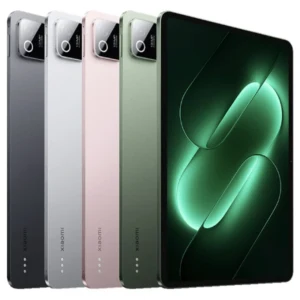
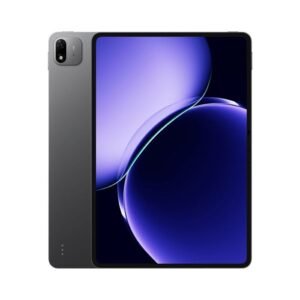
| |
| Price | $450.00 $715.00 |
| Our Rating | |
| Brand | Xiaomi Xiaomi |
| Category | Xiaomi Tablets Xiaomi Tablets |
Identity and pricing
| Brand / Model A brand model is a strategic framework that defines how a company builds, positions, and manages its identity to connect with customers and guide business decisions. | Xiaomi Pad 9 (Mi Pad 9) Xiaomi Pad 9 Pro Max |
| Variant A variant is something that differs in some way from others of the same kind or from a standard. |
8GB+128GB 8GB+256GB 12GB+256GB Soft Light Edition (matte glass) 8GB/256GB 12GB/512GB 16GB/512GB 16GB/1TB; standard glass or Matte Glass (Nano Soft Light) |
| Release date A release date is the specific day when a product, service, or official piece of information becomes available to the public | September 23, 2026 September 7, 2026 (China) |
| Availability Status Availability status means the current condition or state of whether a person, product, system, or resource is accessible, online, or ready for use. | On Sale On Sale |
| Price A price is the amount of money or other compensation that a buyer gives to a seller to acquire a product or service |
8GB+128GB: CNY 2,999 (~$447) 8GB+256GB: CNY 3,299 12GB+256GB: CNY 3,799 Soft Light Edition adds CNY 200 CNY 4,799 (about $715 / €615) for 8GB/256GB CNY 6,899 for Matte Glass 16GB/512GB CNY 7,899 for 16GB/1TB (standard and Matte Glass) |
Software
| Operating system An operating system (OS) is the main system software that manages a computer's physical hardware and provides a base for other programs to run | HyperOS 4.0 on Android 17 Android 17, HyperOS 4 |
| Chipset A chipset is a group of microchips on a computer's motherboard or electronic device that manages the flow of data between the CPU, memory, storage, and peripheral devices. | Qualcomm Snapdragon 8s Gen 4 (4nm) Xiaomi XRING O3 (3nm, TSMC) |
| CPU cores A CPU core is an independent processing unit inside a computer's central processing unit (CPU) that reads and executes program instructions. | Octa-core, prime core up to 3.21GHz 10 cores: 2x C1-Ultra at 4.35GHz, 4x C1-Premium at 3.68GHz, 4x C1-Pro at 3.15GHz |
| GPU A GPU stands for Graphics Processing Unit, which is a specialized electronic chip designed to rapidly render images, video, and 3D graphics. | Adreno 825 Arm G2-Ultra NX, 16 cores |
| RAM RAM stands for Random Access Memory, which is a device's short-term memory used to temporarily store data that the processor needs right now. | 8GB or 12GB 8GB / 12GB / 16GB (LPDDR6) |
| Internal storage Internal storage is the built-in, permanent memory inside a device like a smartphone, tablet, or computer used to hold the operating system, apps, and your personal files. | 128GB (UFS 3.1) or 256GB (UFS 4.1). No card slot 256GB / 512GB / 1TB (UFS 4.1); no card slot |
Tablet Display
| Screen size Screen size is the physical diagonal measurement of a display area, usually calculated from one corner to the opposite corner and expressed in inches. | 11.2 inches 13.3 inches |
| Resolution The measure of sharpness and detail in a digital photo, video, or screen, usually counted in pixels or dots per inch (DPI). | 3200 × 2136 (~344 ppi) 3408 x 2272 (about 308 ppi) |
| Aspect ratio An aspect ratio is the proportional relationship between the width and height of an image, screen, or object. | 3:2 3:2 |
| Panel type The panel type of a screen or monitor refers to the specific liquid crystal or diode technology used to display images, which dictates the screen's color accuracy, viewing angles, contrast, and speed. | IPS LCD IPS LCD; optional Matte Glass version |
| Refresh rate A refresh rate is the number of times per second a screen updates the image it shows. | 144Hz (360Hz touch sampling, 240Hz stylus sampling) 144Hz |
| Peak brightness Peak brightness is the highest level of luminance a display screen can achieve for a brief moment in a small area. | 800 nits peak 1,000 nits peak |
Battery and charging
| Battery Capacity Battery capacity is the total amount of electrical energy a battery can store and deliver, functioning much like the size of a fuel tank. | 9,720mAh 12,000 mAh |
| Wired charging Wired charging means using a physical cable to connect a device directly to a power source to transfer electricity into its battery. | 45W 120W (also 27W reverse wired and 45W pogo pin reverse charging) |
Tablet Connectivity
| Wi-Fi version A Wi-Fi version is a specific generation or technical standard of wireless networking technology that determines your device's speed, range, and connection quality. | Wi-Fi 7 Wi-Fi 7 (802.11 a/b/g/n/ac/ax/be), dual-band |
| Bluetooth version A Bluetooth version is the specific update level of the wireless rules that a device uses to connect and share data | 6.0 6.0 |
| Cellular Relating to mobile phone and wireless data networks that divide a region into small geographic areas called "cells," each served by a local radio base station or tower. | None None; Wi-Fi only |
| SIM type A SIM (Subscriber Identity Module) type or size refers to the physical dimensions or digital architecture of the smart chip that connects your phone to a mobile network. | No SIM No SIM |
| 5G support 5G support means a device or network can connect to the fifth-generation cellular mobile network, delivering much faster download speeds and lower response times than older 4e and 4G LTE systems. | |
| NFC NFC stands for Near Field Communication, a short-range wireless technology that lets two electronic devices exchange data when they are placed a few centimeters apart. |
Ports
| Charging port type A charging port type is the physical shape and design of the socket on an electronic device where you plug in a cable to supply power or transfer data | USB-C USB Type-C |
| USB USB stands for Universal Serial Bus, a global standard connection for passing data, power, and video signals between computers and electronic devices. | USB 3.2 Gen 1 (5Gbps), with OTG USB 3.2 Gen 2, with DP-in (monitor mode) and OTG |
Tablet Cameras
| Main camera A main camera (or primary camera) is the principal, highest-quality imaging lens and sensor system on a device—most commonly located on the rear of a smartphone. | 13MP 50MP with OIS |
| Front camera A front camera is a built-in lens on the same side as a device's screen—such as a smartphone, tablet, or laptop—that points directly at the user. | 8MP 32MP |
| Video A video is an electronic recording of moving visual images, usually played with sound on a screen. | Up to 4K (3840 × 2160) at 30fps 4K (2160p), up to 60fps |
Input and accessories
| Stylus support Stylus support means a device or software can recognize, connect, and work with a pen-like input tool for precise writing, drawing, and navigating | |
| Keyboard support Keyboard support means the ability of a software application, website, or operating system to let users navigate, input text, and execute commands entirely using a physical keyboard instead of a mouse or touch screen. |
Physical
| Weight Weight is the downward force that gravity exerts on an object. | 485g (494g Soft Light Edition) 645g (653g for the Matte Glass version) |
| Dimensions A dimension is a measurement in a specific direction (such as length, width, or height) or a distinct aspect, feature, or scope of a situation. | 251.2 × 173.42 × 5.75mm 296.2 x 203.08 x 5.67mm |
| Materials A material is a physical substance or matter used to make objects, build structures, or create products | Glass front, aluminum frame, aluminum back Glass front, aluminum frame and back |
| Available colors different color choices that are ready for you to buy or pick for a product. | Black, Silver, Spruce Green, Ice Peach Pink Burgundy/Wine Red, Silver, Gray |
| Water resistance rating A water resistance rating measures how much static water pressure a device or material can withstand before leaking or failing | None None |

|
New Arrivals

Popular Posts