



- Home
- Catalog
- Xiaomi TWS Earphones
- Xiaomi OpenWear Stereo
Xiaomi OpenWear Stereo
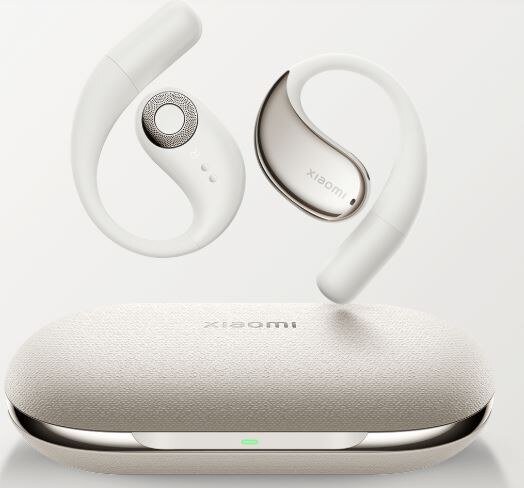
- Fit type: Open-ear ear-hook
- Battery: 788mAh
- Bluetooth version: 5.3
- OS and app compatibility: Android and iOS
PROS
- It has longer battery life
- It has tech tech for an earphone
- It is IP54 rated and support dual-device connection and Google Fast Pair.
CONS
- this model lists a beta ANC mode.
- It costs at launch (€120, and neither model has wireless charging confirmed.
The Xiaomi OpenWear Stereo (model M2319E1) is Xiaomi’s first open-ear earbud, priced in the entry-to-mid range. It’s a true wireless ear-hook design: liquid-silicone hooks, 9.6 g per bud, and a 17 × 12 mm dynamic driver on each side. It launched in China in April 2024 and went global later that year. The notable part is LHDC support next to SBC and AAC, which bone-conduction open-ear models usually can’t do.
Each earbud has a 60 mAh battery, and the case has 788 mAh. Xiaomi quotes 7.5 hours per charge and 38.5 hours with the case. Charging is USB-C only, with no wireless option, and Bluetooth is 5.3 with a 10 m range. One retailer lists 1.5 hours of playback from 10 minutes of charging. Xiaomi’s own spec sheet says nothing about fast charging, so treat that number as unconfirmed.
It launched at €119.90 in Germany and sells for S$199 in Singapore. The realistic buyer wants to hear traffic and conversation while listening and would rather have comfort and battery life than bass. Inside Xiaomi’s range it sits below the OpenWear Stereo Pro (€149.99 in the EU) and beside regular in-ear models like the Xiaomi Buds 5. Outside the brand, the Shokz OpenFit and Huawei FreeClip are the obvious rivals. The closest direct comparison is the Nothing Ear (open), another ear-hook open-ear model at a similar price.
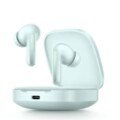
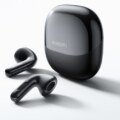
Xiaomi OpenWear Stereo Images
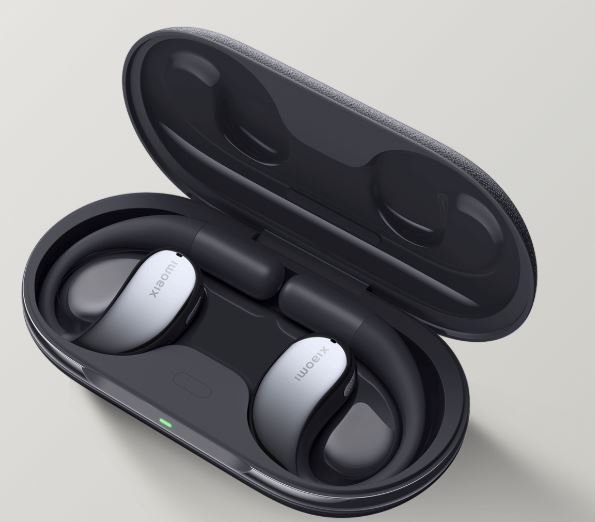
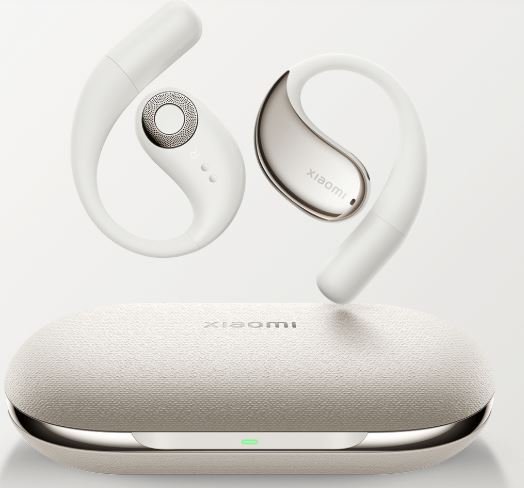
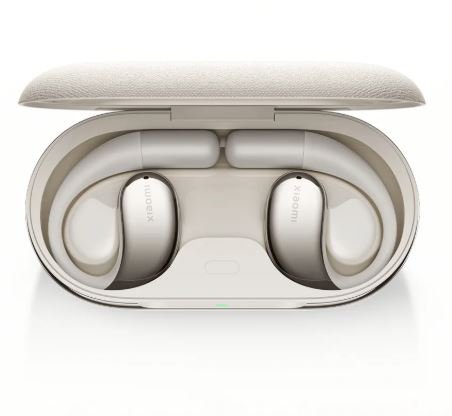
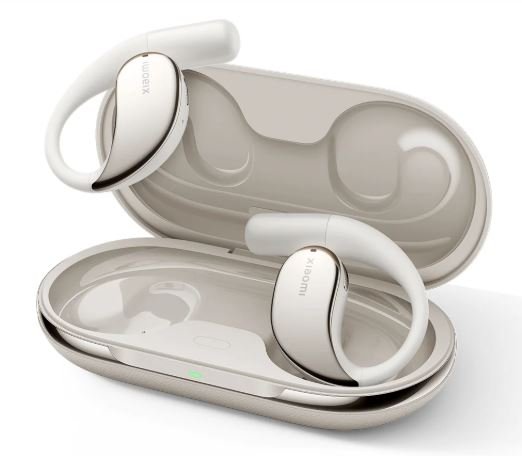
Full Specifications
Identity For TWS Earphones
| Model and series A model is a specific version, design, or representation of a product, system, or idea. A series is a group or family of related models that share a common brand, platform, or theme, and are usually released or connected in a sequence. | OpenWear Stereo, Xiaomi’s first open-ear earbuds (BHR8473GL / BHR8474GL) |
| Launch date A launch date is the specific day and time when a product, service, project, spacecraft, or vessel is officially introduced, released, or made available to the public | Sale began in Japan on July 4, 2024; Spain lists 14/8/2024 |
| Regional availability Regional availability means that a specific cloud service, software, product, or feature is officially supported and running in a designated geographic area or cloud region | Japan, Malaysia, Singapore, Spain, Middle East and others |
| Price A price is the amount of money or other compensation that a buyer gives to a seller to acquire a product or service |
RM599 in Malaysia; S$199 in Singapore; €120 in Spain |
| Available colors different color choices that are ready for you to buy or pick for a product. | Sandstone Beige, Cosmic Grey |
Audio
| Driver size and type Driver size and driver type refer to the physical dimensions and internal technology of the small speaker inside headphones or earbuds that turns electrical signals into sound. | 17x12mm dynamic driver plus a 10mm leakage-reduction driver |
| Codecs A codec is a hardware or software tool that compresses digital media (like audio, video, or images) into a smaller file size for storage or transmission, and then decompresses it so you can play or view it | AAC, SBC, LHDC |
| Hi-Res Audio certification A Hi-Res Audio certification is a technical standard—administered by the Japan Audio Society (JAS) and recognized globally—that indicates an audio device or file can reproduce higher-quality sound than a standard compact disc (CD) | |
| Spatial audio / Dolby Atmos support Spatial audio is a general term for any sound technology that creates a 3D listening environment, making sounds appear to come from all around you—including the front, sides, behind, and even overhead—rather than just flat left and right channels. | |
| Equalizer / app tuning An equalizer (or EQ) is an audio tool that lets you raise or lower specific frequency ranges (such as bass, midrange, or treble) to reshape the balance of sound. App tuning means using an equalizer built into a music app, phone settings, or headphone companion app to customize how your audio sounds |
Noise control
| ANC type and max depth ANC stands for Active Noise Cancellation, a technology that uses built-in microphones to detect outside background noise and create an opposite sound wave to erase it | ANC listed as a “beta mode” |
| Transparency mode Transparency mode is a headphone feature that lets you hear real-world sounds at the same time as your music, podcasts, or calls | |
| Mic count The mic count on TWS (True Wireless Stereo) earbuds refers to the total number of built-in micro-telephones (microphones) packed into the pair of earbuds to pick up your voice and handle noise reduction | 2 |
| Call noise reduction Call noise reduction (often called microphone noise cancellation, call noise suppression, or Environmental Noise Cancellation [ENC]) is a technology that cleans up your voice during a phone call or video chat by filtering out background noise | |
| Wind noise reduction Wind noise reduction is a technology or technique used to block, filter, or suppress the low-frequency rumble and distortion caused when air blows directly across a microphone diaphragm |
Battery and charging For TWS Earphones
| Earbud battery An earbud battery is a tiny, rechargeable power cell—usually a small lithium-ion coin cell—built into a wireless earphone to store energy and run its internal electronics | 60mAh |
| Case battery A battery case is a protective phone cover that has a built-in rechargeable battery to extend the power life of a smartphone | 788mAh |
| Playback per charge Playback per charge (also called playtime or listening time per charge) is the amount of continuous time a device—such as wireless earbuds, headphones, or a speaker—can play audio on a single, full battery cycle before it needs to be recharged | 7.5 hours |
| Total playback with case Total playback with case means the combined total number of hours wireless earbuds can play audio before both the earbuds and the charging case run completely out of power and need to be plugged into a wall outlet or charger | 38.5 hours |
| Charging port and wireless charging support A charging port is the physical slot or plug-in connector on a device (like a USB-C or Lightning port) where you insert a cable to power the battery or transfer data. Wireless charging support means a device can receive power and charge its battery without needing a cable plugged into that port, using magnetic fields instead | USB-C; |
| Fast charge Fast charging is a technology that recharges a device's battery much faster than standard charging methods (typically moving past a basic 5-watt baseline up to 20W, 100W, or higher) | Not published |
| Full charge time Full charge time is the total duration required to restore a battery from a completely discharged state (0%) to 100% capacity | Not published |
Connectivity For TWS Earphones
| Bluetooth version and chipset In wireless devices, the Bluetooth version determines the capabilities and features available, while the Bluetooth chipset is the physical hardware that actually executes those features. | Bluetooth 5.3 |
| Multipoint Allows wireless headphones, earbuds, or speakers to connect to two (or more) source devices simultaneously (such as a laptop and a smartphone), letting you switch audio or take a call on one device while listening to media on the other. | |
| Low-latency mode Low-latency mode is a setting that minimizes the delay (latency) between an action you take and the resulting response on your screen or in your audio | LHDC low-latency |
| Google Fast Pair Google Fast Pair is a technology that lets you connect Bluetooth devices to your Android phone, tablet, ChromeOS device, or Google TV with a single tap | |
| OS and app compatibility OS and app compatibility means that a software application can run properly on a specific operating system (OS) and hardware device without errors, crashes, or missing features | Xiaomi Earbuds app; works with HyperOS |
Controls
| Control type A control type means the specific category, kind, or classification of a mechanism used to manage, monitor, regulate, or restrict a process, system, or risk. | Touch |
| Customizable gestures Customizable gestures are user-defined physical movements—such as screen taps, swipes, drawing specific shapes, or hand motions—that you can program a device or application to recognize and link to a specific action | |
| Wear detection Wear detection generally refers to two distinct concepts depending on the context: machinery and industrial monitoring (tracking physical wear and tear on mechanical parts) or consumer electronics (sensing whether a user is physically wearing a device) |
Build
| Fit type On True Wireless Stereo (TWS) earbuds, Fit type refers to the physical design of the earbud and how it rests or seals inside your ear | Open-ear ear-hook, liquid silicone |
| Weight Weight is the downward force that gravity exerts on an object. | 9.5g per earbud, 88.4g total |
| Dimensions A dimension is a measurement in a specific direction (such as length, width, or height) or a distinct aspect, feature, or scope of a situation. | Earbud 43.9 x 47.1 x 16.6 mm |
| IP rating An IP rating (Ingress Protection rating) is a global standard developed by the International Electrotechnical Commission (IEC) that measures how well an electronic device or mechanical enclosure resists dust, accidental contact, and liquids | IP54 |
User Reviews
More Products from Xiaomi



New Arrivals
-
 Xiaomi Buds 5 Pro
$200.00
-
Xiaomi Buds 5
$100.00
-
Xiaomi Type-C Earphones
$6.00
-
Redmi Buds 6 Active
$20.00
-
Redmi Buds 6 Lite
$20.00
-
Redmi Buds 6 Play
$10.00
-
Redmi Buds 6 Pro
$59.00
-
Redmi Buds 6
$30.00
-
Xiaomi OpenWear Stereo Pro
$150.00
-
Xiaomi Buds 6
$99.00
-
REDMI Buds 8 Lite
$27.00
-
REDMI Buds 8 Active
$16.00






Popular Posts