




Mijia Smart Audio Glasses vs Xiaomi Smart Audio Glasses
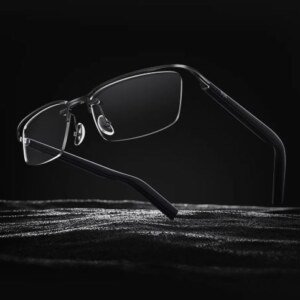
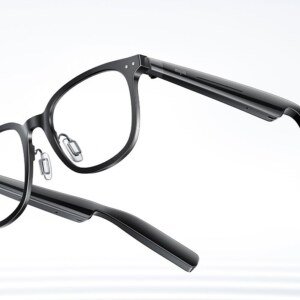
| |
| Price | $200.00 $90.00 |
| Our Rating | |
| Brand | Mijia Xiaomi |
| Category | Xiaomi Smart Audio Glasses Xiaomi Smart Audio Glasses |
Identity For Smart Audio Glasses
| Product name A product name is the official or customer-facing title assigned to a specific item, good, or service to identify and distinguish it from other items in a catalog, store, or market | Mijia Smart Audio Glasses Xiaomi Smart Audio Glasses |
| Model number A model number is a unique alphanumeric code assigned by a manufacturer to identify a specific version, design, or series of a product | Not listed MJSSO20FC |
| Variant / frame style "Variant" refers to the specific version of an item (like color or size), while "Frame Style" refers to the physical shape, design, or structure of the item's outer boundary. | Pilot-Style, Browline, Titanium Single frame (removable) |
| Availability by region Availability by region means whether a specific product is in stock, can be purchased, or is legally allowed to be sold in a particular geographic area (such as a country, state, city, or postal code). | Europe and Singapore; varies by region Global Mi sites (SG, MY, TH, LatAm) and AliExpress |
| Price A price is the amount of money or other compensation that a buyer gives to a seller to acquire a product or service | €179 (Browline, Pilot-Style); €199 (Titanium) About $86.54 (AliExpress) |
Dimensions and design
| Full unit net weight the exact weight of the actual product or contents inside a complete, single packaging unit (such as a box, carton, or case), excluding the weight of any outer packaging, containers, pallets, or wrapping materials. | Not listed 40 g |
| Weight Weight is the downward force that gravity exerts on an object. | 32.3 g (Pilot), 32.4 g (Browline), 27.6 g (Titanium) (without lenses) - 33.4 g |
| Lens width the horizontal measurement of one eyeglass or sunglass lens at its widest point, expressed in millimeters (mm). | Not listed 53 mm |
| Nose bridge width Nose bridge width has two main meanings: it can refer to the physical width of the bony and cartilaginous ridge of your nose, or to the sizing measurement on a pair of eyeglass frames. | Not listed 20 mm |
| Lens height Lens height is the vertical measurement of an eyeglass lens, taken from top to bottom (at its tallest point within the frame), usually measured in millimeters | Not listed 39.8 mm |
| Frame width Frame width refers to how wide a pair of glasses is from one outer edge to the other, or the width of a picture frame molding depending on the context. | Not listed 144.9 mm |
| Temple arm length Temple arm length is the total length of the side piece (or "arm") of an eyeglass or sunglass frame, measured in millimeters from the front hinge screw all the way to the tip that rests behind your ear | Not listed 155 mm |
| Temple width at narrowest point "Temple width at the narrowest point" refers to the shortest horizontal distance across your forehead between your two temples (the indentations just outside your eyes, above the cheekbones) | 5 mm (22% slimmer than original) Not listed |
| Frame material A frame material is the specific substance or combination of substances used to manufacture the outer structure of an object—most commonly eyeglass frames, sunglasses, or picture frames. | Stainless steel (Pilot), nylon + stainless steel (Browline), titanium (Titanium) Nylon |
| Lens type A lens type refers to the specific physical shape, optical function, or category of a transparent optical device used to bend (refract) light | HD TAC polarised (Pilot); blue-light-blocking (Browline, Titanium) Alternative display lens |
| Manufacturing process / coating A coating in a manufacturing process is the application of one or more layers of material—such as paint, polymer, metal, or chemical film—onto the surface of a substrate to alter, protect, or enhance its properties | NCVM coating (nano NCVM and unibody on Titanium) High-gloss coating |
| Hinge type hinge type in glasses refers to the mechanical joint connecting the front frame (lens rim) to the ear pieces (temples). This joint allows the arms to fold open and closed, and it dictates how the glasses fit, flex, and endure daily wear. | Piano-wire hinge (15,000 flexes tested) 1st-gen flexible hinge |
| Interchangeable frames supported "Interchangeable frames supported" means that a device or product lets you physically swap or replace the outer frame parts, front plates, or styles while keeping the core inner components (like prescription lenses or base hardware) the same | |
| Quick-release generation In eyewear, the term "quick-release" refers to a modern mechanism designed to let you rapidly snap parts of your glasses on and off without using tools. Depending on the type of glasses you are looking at, "quick-release generation" usually points to one of two industry-wide tech advancements: | 2nd 1st |
| Nose pads Nose pads are the small, soft cushions attached to the bridge of eyeglasses or sunglasses that rest directly on the wearer's nose. | |
| Water and dust resistance rating A water and dust resistance rating is measured by an IP (Ingress Protection) code, which is a global standard created by the International Electrotechnical Commission (IEC) to show how well a device keeps out solid particles and liquids | IP54 IP54 |
| Prescription lens support Prescription lens support means a device, headset, or frame is designed to accommodate custom vision-correcting (Rx) lenses. |
Lens and eye protection
| Polarised lens specialized sunglass lenses that block blinding glare caused by light reflecting off smooth, flat surfaces like water, snow, or wet roads. | |
| UV protection UV protection means using specialized barriers, materials, or products to block or filter out invisible ultraviolet (UV) radiation from the sun or artificial sources, preventing damage to the skin, eyes, or materials. | |
| Blue-light filtering Blue-light filtering is the process of blocking or reducing high-energy, short-wavelength blue light emitted from digital screens (like smartphones, computers, and TVs) or artificial light sources |
Audio For Smart Audio Glasses
| Audio Audio means sound, or the recording, transmission, and reproduction of sound within the range of human hearing. | Open-ear Open-ear |
| Speaker Count Speaker count is the audio processing task of automatically estimating the total number of unique or simultaneous people speaking in a recording. | Ultrasonic SLS0820, air-conducted Not listed |
| Reverb / soundstage In audio and music production, reverb and soundstage describe how sound interacts with a physical or simulated space. While they are closely related and often influence each other, they refer to two distinct concepts in how we perceive sound. | |
| Sound leakage protection / privacy mode Sound leakage protection (often called Privacy Mode on headphones or audio glasses) is a technology designed to prevent people around you from hearing what is playing in your earbuds, headphones, or smart glasses. | |
| Microphone count A microphone count (or microphone quantity) refers to the total number of individual microphones available, required, or active for a specific audio setup, event, recording, or piece of hardware | 4 2 |
| Wind noise reduction Wind noise reduction is a technology or technique used to block, filter, or suppress the low-frequency rumble and distortion caused when air blows directly across a microphone diaphragm | |
| Call noise cancellation / echo cancellation Call noise cancellation and echo cancellation are audio processing technologies that clean up voice and video calls |
Battery and charging For Audio Glasses
| Continuous playback time Continuous playback time refers to how long a device, speaker, or pair of headphones can play audio or video on a single charge without stopping or needing a recharge | 13 hours 10 hours |
| Continuous call time Continuous call time generally refers to an uninterrupted or ongoing phone interaction, communication stream, or a specialized financial/options trading mechanism. | 9 hours 7 hours |
| Standby time Standby time means the period when a person, device, or equipment is turned on, operational, and ready to act or work, but is not actively performing a task. | 12 days 11 days |
| General usage time General usage time refers to the total amount of time a device, system, or service is actively used or running. | Not listed 24 hours |
| Days of use "Days of use" (or days of usage) refers to the duration, length of time, or number of days that a product, device, service, or resource can be operated or utilized before it runs out, expires, or needs recharging. | About 1.5 days Not listed |
| Charging Time Charging time is the total length of time required to recharge a battery from empty to full capacity. | About 1 hour About 2 hours |
| Fast-charge rate A fast-charge rate refers to the speed at which a device or battery absorbs electrical energy to replenish its capacity much faster than a standard baseline charger | 2C; 10 min gives 4 hours of listening Not listed |
| Charging port type A charging port type is the physical shape and design of the socket on an electronic device where you plug in a cable to supply power or transfer data | Magnetic Not listed |
| Magnetic charging Magnetic charging is a wireless charging method that uses built-in magnets to automatically snap and align a device's charging coil directly over the charger's coil. |
Connectivity For Audio Glasses
| Bluetooth version A Bluetooth version is the specific update level of the wireless rules that a device uses to connect and share data | 5.4 5.2 |
| Google Fast Pair Google Fast Pair is a technology that lets you connect Bluetooth devices to your Android phone, tablet, ChromeOS device, or Google TV with a single tap | |
| Dual-device connection A dual-device connection (often called Bluetooth Multipoint) is a feature that allows a single pair of wireless headphones, earbuds, or a speaker to stay linked to two different devices at the exact same time (such as your smartphone and your laptop). | |
| Phone compatibility Phone compatibility means how well a mobile phone can work with a specific network, carrier, app, or accessory without issues | Not listed Android 10 / iOS 13 or later |
Smart features For Audio Glasses
| Wear detection Wear detection generally refers to two distinct concepts depending on the context: machinery and industrial monitoring (tracking physical wear and tear on mechanical parts) or consumer electronics (sensing whether a user is physically wearing a device) | |
| Touch controls Touch controls are a method of human-computer interaction where you operate a device by directly touching a screen, pad, or surface with your fingers or a stylus instead of using physical buttons, a mouse, or a keyboard. | |
| Customizable gestures Customizable gestures are user-defined physical movements—such as screen taps, swipes, drawing specific shapes, or hand motions—that you can program a device or application to recognize and link to a specific action | |
| Touch-activated voice assistant A touch-activated voice assistant is a digital helper that requires you to physically tap or press a button before it starts listening to your voice commands. | |
| Audio recording An audio recording is the process of capturing sound waves—such as music, speech, or environmental noise—using a microphone or other transducer, and saving them into a digital or analog format so they can be stored, edited, and played back later. | |
| Recording scenarios A recording scenario refers to a preset configuration, template, or specific set of conditions used to capture audio, video, or data during a session | Surroundings, online meetings, calls, audio and video playback None |
| Recording indicator light A recording indicator light is a visual signal (usually an LED light or a screen dot) that lets you know a device—such as a camera, smartphone, laptop, or recorder—is actively capturing video or audio. | |
| Notification reading A notification reading means the status or action of opening and viewing an alert, message, or formal notice sent to you by a device, app, or official system | |
| Find my glasses "Find my glasses" typically refers to the literal act or challenge of locating misplaced physical spectacles, or a technology feature designed to help you track them down. | |
| Companion app A companion app is a secondary software application—usually for smartphones or tablets—that works alongside a primary device, video game, website, or smart hardware system to extend its features, control, or monitoring capabilities. | Xiaomi Glasses app None |

|
New Arrivals
-
 Mijia Smart Audio Glasses
$200.00
-
Xiaomi Smart Audio Glasses
$90.00
-
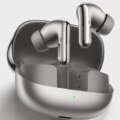
Xiaomi Buds 5 Pro
$200.00
-
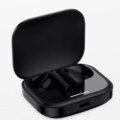
Xiaomi Buds 5
$100.00
-
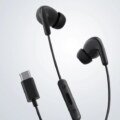
Xiaomi Type-C Earphones
$6.00
-
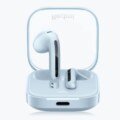
Redmi Buds 6 Active
$20.00
-
Redmi Buds 6 Lite
$20.00
-
Redmi Buds 6 Play
$10.00
-
Redmi Buds 6 Pro
$59.00
-
Redmi Buds 6
$30.00
-
Xiaomi OpenWear Stereo Pro
$150.00
-
Xiaomi OpenWear Stereo
$120.00


Popular Posts
Poco X8 Pro Max Google Camera 9.3 – Download Latest GCam...
Here is the latest Poco X8 Pro Max Google Camera 9.3, for those who love the optimizing settings of the Gcam. Poco skipped the...